the humanitarian crisis

As we’ve been poignantly reminded in recent weeks how fragile and precarious the world can be, emotions seem to be running a little higher. And when emotions run high, it’s easy to become fixated on specific people. (With the unfortunate plethora of media bias and hence agenda, some seem especially fixated — lookin’ for blame in all the wrong places — dare I semi-humbly suggest.)

But if there was one person that would be wise for each of us to at some time focus on as countries continue to clash, in and out of cease fires, my sense is it would be the refugee… the one who has been forced to leave their home due to war, persecution or disaster.

The 1951 Refugee Convention specifically defines a refugee as “someone who is unable or unwilling to return to their country of origin owing to a well-founded fear of being persecuted for reasons of race, religion, nationality, membership of a particular social group, or political opinion.” They are protected by international law.

I’m grateful they are protected. But my goal today is to make this a little more personal.

According to the United Nation’s refugee agency (UNHCR) — and this number keeps changing — millions of Ukrainians have fled their home country and crossed over into Central Europe.  Poland and Romania have each welcomed significant populations of displaced persons.

As the Polish border guard service tweeted, when their welcomed refugee count topped 1 million, “This is a million human tragedies, a million people banished from their homes by the war.”

A million human tragedies…

As has been noted here — Ukraine, Poland, Romania — they are some five, six thousand miles away. It’s easy to dismiss what’s far away. It’s easy to not dwell on what we don’t see. It’s easy to care lesser. We tend to care most about what’s most in front of us, issues and experiences in which we can more clearly envision and relate to an aspect of the overall impact.

I don’t want to do that with the Ukrainian people. If I’m honest, as someone who believes with my whole heart that all are created in the image of God and therefore we should be treating all as such, I don’t want to be dismissive of any.

And so my mind continues to contemplate the question of a wise friend…

“How am I actively sitting in the suffering of others?”

Is it out of sight/out of mind?

That doesn’t seem right.

Is it, “Well, it depends on who’s supporting that group of people politically. If _______ supports them, so will I.” Fill in the blank with whomever you wish; the reality is that such shows my compassion and care is selective.

That, too, doesn’t seem right.

Friends, I have no easy answer this day. I continue to hear selfless stories of volunteers and servant-hearted citizens assisting refugees at the border. It’s tireless work. How do we best help those who’ve been forced to flee?

How do care for those who’ve left family behind? … family they may never see again? How do we serve those caught up in this humanitarian crisis?

No answers. No simple solutions. Thankfully, no less, miles between are incapable of minimizing the power of prayer. I still question what more we can do… money, donations, care…

Today, though, I just didn’t want to ignore the perilous, heartbreaking plight of those on the other side of the planet. I didn’t want us to fail to focus on the refugee. 

That doesn’t seem right either.

Respectfully…

AR

just walking down the sidewalk… a little more personal teaching…

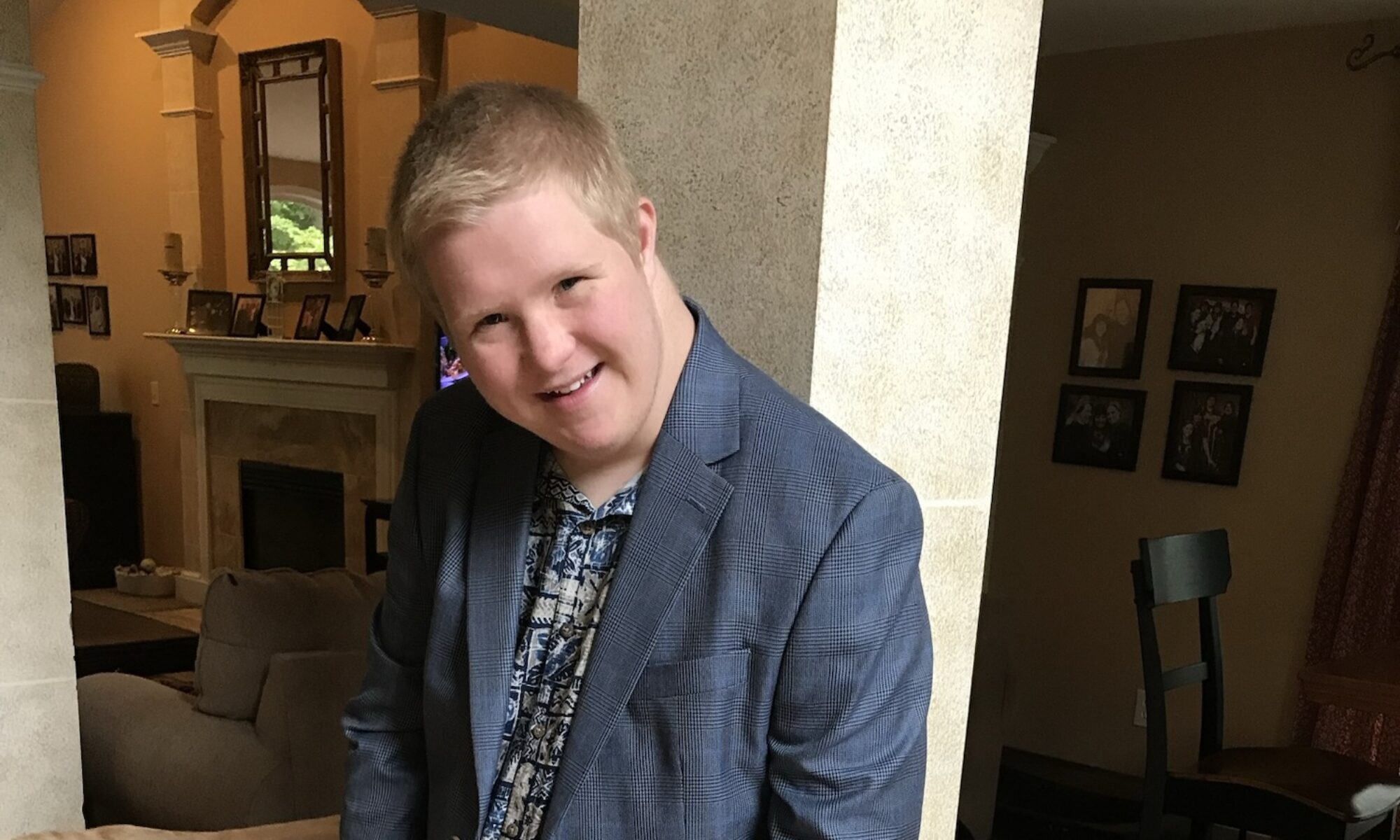
We were walking to the gym in the morning Florida sunshine, as is our regular Monday routine. My son — for those of you who don’t know him — is this vivacious, articulate, musically-gifted 20 year old. There are days he claims to be a rap star. I just think of him as a star. 

He happens to have Down syndrome, but no, it’s not what defines him. I happen to be about 5’8”, an avid sports enthusiast, and have a really weird birthmark that somehow resembles the combined landmass of Europe and Asia. None define me either.

Sometimes he likes to still grab my hand while walking. It’s a sweet thing. Sometimes, too, there is genuine need for directional help.

On this recent day, we were a little early in our pursuit. Such caused the traffic to be a little fuller, most at the onset of their day. We came to a decently busy two-way stop, with the other road freely flowing. Let me try to help you envision the scenario a little better…

We stood still at the stop sign. A white sedan was stopped at the sign across the street, waiting to turn. The traffic between us was neighborhood-slow but also steady.

In our neighborhood, which is sort of the bomb of nearby ‘hoods, in my opinion — we do community well — but consistent with our community desire to honor and care for, pedestrians always have the right of way. That means stop sign or not, cars are encouraged to stop, allowing the walkers to proceed.

But on this particular day, the cars that were coming from the free-flowing cross-street didn’t slow to a point where I was comfortable stepping out into the street immediately with my son. I couldn’t tell for certain that they were going to stop for me. And so instead of strolling right through the cross-section, I stopped. Josh and I paused for maybe an extra 2 seconds, possibly 3.

The gentleman in the car waiting to turn reacted immediately. He honked. At me and Josh.

Now no doubt compared to all that’s going on in the world today, this story pales in comparison. I agree. Yet knowing God cares about all things big and small and uses them to teach each of us in our every day, I couldn’t help to just shake this story. I kept thinking about the man in the car, his reaction, and how when I made eye contact with him in his car — and his approximate 3 year old in the back seat — how he just glared. At me and Josh.

Friends, let’s give him some grace. Really — no judgment. We’ve all had moments when we’ve chosen to honk. And no doubt several of us still adamantly insist that such was the exact right thing to do.

But I keep thinking about one question…

What did the man in the car not know?

What could he not see — what did he not realize — that prompted him to justify the honk? … the glare? … the clear impatience?

He couldn’t see the needs of my son. He didn’t know he sometimes struggles with directions and crossing streets. He’s a 20 year old, growing young man.

He couldn’t tell that I was actively gauging the oncoming traffic. He couldn’t tell that in my assessment, the cross traffic hadn’t yet committed to stop.

And he couldn’t tell that we had zero intent to inconvenience him. We had no desire to impact him negatively. I was solely focused on the safety of my own kid — no doubt the same reason his kid sat protected in the car seat behind him.

He and I were both protecting our kids. He and I both had places to go. The situations just looked a little different. We weren’t in any competition with one another, but he couldn’t tell that because our destinations differed.

So the question that comes back to me in yes, just a simple scenario, is: where do I honk? … especially when the destinations differ?

Where do I justify glaring at another — and maybe still hang on to a mistaken judgment — because I don’t know what I don’t know?

I love how God teaches us…

Every day. In the ordinary. If we don’t shake the stories too soon…

Respectfully…

AR

who is Volodymyr Zelensky?

The former actor… comedian…  Now the sixth and current president of Ukraine. A few notes first about the man, who seems quickly becoming more…

He was a political outsider when announcing his candidacy just over 2 years ago. He was said to be for the people and against the so-called elite. He positioned himself as anti-establishment and anti-corruption. He has intentionally worked to unify his country, bringing together the Ukrainian-speaking and Russian-speaking populations. There’s a reason a recent tweet has gone viral, reading: “BREAKING: every woman in your life now has at least a small crush on Volodymyr Zelensky and there’s absolutely nothing you can do about it.” As some have responded, “The men, too!”

Like many, I find myself refreshing my news feed often these days, appalled by Russia’s aggression and attracted to the leadership of Zelensky. There’s simply something solid when asked if we can help him exit, his response is: “The fight is here. I need ammunition — not a ride.” There’s something admirable about a leader who instead of hiding in a basement or bomb shelter, says to the cameras on the street, “We are here. We are in Kyiv. We are defending Ukraine.”

Zelensky won the presidency with 73.2% of the vote. My sense is that number would be even higher now.

No doubt Zelensky’s style and stand has resonated across the world. As respected Intramuralist favorite David French articulates, Zelensky’s “moral and physical courage stands out in an age when so many politicians shrink from the moment, when they wilt under pressure, bowing to Twitter mobs rather than maintaining even an ounce of integrity in the face of adversity.” Allow me to humbly share more…

“… It’s sometimes hard to gauge in real time whether any given moment, no matter how dramatic, is truly culturally or historically significant. Not every viral video matters, and we’re quick to create (and forget) both heroes and villains. 

But there is something about Zelensky’s stand that is different. There’s something about it that’s penetrating far beyond his country’s borders and touching the hearts of Americans across the political spectrum. It means something real, something we should remember.

Part of the importance rests in Zelensky’s identity. Nothing about his past suggests that he was ready to potentially become Ukraine’s Churchill. Indeed, in the run-up to the Russian invasion itself, there were a lot of reasons to wonder whether he was, in the words of a ‘New York Times’ essay by a Ukrainian journalist, ‘seriously in over his head.’

I’ve spoken to a number of knowledgeable people who questioned not only Zelensky’s presidency (Has he done enough to root out corruption? Has he surrounded himself with friends and cronies?) but also his preparation for the Russian invasion. Did he downplay the threat of Russian attack for too long? Did he mobilize too late?

The best argument for Zelensky was that he was an ordinary man caught in extraordinary times. Because evil often leaves virtue with few good choices, he had no clear path. Mobilize too soon, and you can cripple your economy and perhaps provide pretext for a Russian attack. Mobilize too late, and you’ve granted the invader a military advantage. Moreover, when exactly do you tell your people that the Russians are coming? After all, there were disagreements about the likelihood and extent of the Russian attack right until the moment it launched. 

But extraordinary times are also when ordinary men can become heroes. We’ve become accustomed to dealing with brand-managed politicians—men and women who sometimes act more like messaging machines than leaders or legislators. We’re just as accustomed to moral cowardice. Politicians fold to Twitter mobs. They say one thing in green rooms and another thing on television because they’re terrified of the activist base, or mean words from Mar-a-Lago. 

It’s not that we’re even experiencing a political class full of ordinary people in extraordinary times, but rather too often it seems as if they’re small people, who shrink even smaller the bigger the moment. There are exceptions here in the United States, but they’re exceptions. There is a reason why public trust collapses. There is a reason why angry cynicism grips our land. 

In these circumstances it is breathtaking to witness actual courage. It’s even more breathtaking when that courage is both moral and physical. He’s not just speaking against evil, he’s quite literally standing against evil–when evil seems to possess all the power, and virtue feels so weak.  

And this reminds us of something important about leadership. It’s one thing to say, ‘I will lead you.’ It’s another thing entirely to say, ‘I am with you,’ and to demonstrate it by laying your own life on the line…” 

We’re with you, Mr. President. May God bless your boldness, courage, leadership and resolve. We are watching, praying, and cheering you on.

Respectfully…

AR

questions about Ukraine/Russia

As one who asks and encourages the asking of good questions, it’s fascinating the plethora of questions we all have about Ukraine… what’s going on… how far will this go… what will happen to the Ukrainian people… how much more will this inflate prices here… and how should we wisely, unitedly respond.

So many questions — 50 to be exact — from ABC, CBS, NBC and more… from Bloomberg, Harvard, and FiveThirtyEight. Watch out for the overly slanted accounts… none intentionally included here…

Some of these questions have been answered. Others will never be. Alas, we’ve been collectively asking these past 2 weeks…

  1. As West Unites on Ukraine, What About China and India?
  2. Are the U.S. and Europe Breaking Up?
  3. The Beginning of the End for Putin?
  4. Can China do more to stop Russia’s war in Ukraine?
  5. Can oil and China help Russia survive Western sanctions?
  6. Can Russia’s Sanctions Pain Be China’s Gain?
  7. Can Ukraine defend itself?
  8. Could Ukraine be Putin’s Afghanistan?
  9. Did China Have a Clue?
  10. Do We Want Small Wars or World Wars?
  11. Does Biden’s Presidency Hang on the Crisis with Russia?
  12. How are Russia’s friends and allies reacting to Ukraine invasion?
  13. How far will Putin go – and how far will America go to stop him?
  14. How far will Russia go?
  15. How high can oil—and gas—go?
  16. How is China reacting to the Russia-Ukraine crisis?
  17. How long can Ukraine hold out?
  18. How Much Oil Does the U.S. Import From Russia?
  19. How much trade does Russia do with China?
  20. How Should President Biden Respond to Putin’s War?
  21. How will Russia’s war affect China?
  22. How will sanctions against Russia impact Americans?
  23. Is a Russia-NATO Clash Over Ukraine Ahead?
  24. Is Putin looking for an exit?
  25. Is Sleepy Joe Biden Making Vladimir Putin Blink?
  26. A Modern Churchill? Zelensky…
  27. What Cities Is Russia Targeting in Ukraine?
  28. What Do Americans Think About War?
  29. What Does It Mean to Defeat Putin?
  30. What does Putin want in Ukraine?
  31. What is a no-fly zone, and why has NATO so far rejected calls for one over Ukraine?
  32. What is a Russian oligarch and how do you pronounce it?
  33. What Is China Learning from Russia’s Invasion of Ukraine?
  34. What is NATO, and why is Russia so insecure about Ukraine joining the US-led alliance?
  35. What Is Russia to Us?
  36. What message was Biden sending to Putin?
  37. What options does Biden have to lower gas prices?
  38. Who Is Volodymyr Zelensky?
  39. Why Did Biden Admin Share Russia Intel With China?
  40. Why has the letter Z become the symbol of war for Russia?
  41. Why is Russia invading Ukraine and what does Putin want?
  42. Why Is Russia Invading Ukraine and What Is Happening on the Ground?
  43. Why is Russia invading Ukraine – and will there be a war?
  44. Why is Russia invading Ukraine? Could it be the start of WWIII?
  45. Will Biden Cut A Deal With Putin & Abandon Zelensky?
  46. Will China’s support for Russia hold as condemnation over Ukraine grows?
  47. Will Sanctions Force Putin to Back Down in Ukraine?
  48. Will the war in Ukraine make Joe Biden popular at home?
  49. Will the West Ban Russian Oil Imports?
  50. Will the west place an embargo on Russian oil and gas supplies?

Keep asking, friends… Keep listening, too… 

Respectfully…

AR

[Sources referenced include but are not limited to: ABC News, American Greatness, The American Mind, AP, BBC News, Bloomberg, Brookings, CBS News, CNN, DW Akademie, The Economist, Financial Times, FiveThirtyEight, Foreign Affairs, Fortune, Good to Know, The Guardian, The Harvard Gazette, The Indian Express, National Review, NBC News, New York Post, The New York Times, The New Yorker, Nextgov, Ottawa Citizen, Politico, Rasmussen Reports, Stimson, Substack, USA Today, and The Wall Street Journal.]

UN straight talk

The world is watching. So now what? What should we do?

I suppose if there was one knowingly right way to proceed, we would have done that already. So noting the strategic ambiguity, let’s go here today.

The Soviet Union originally cofounded the United Nations (UN) in 1945. After its dissolution in 1991, Russia succeeded the Soviet Union’s seat, securing with said process permanent membership on the Security Council. According to the United Nations Charter, here are the stated purposes and principles of those belonging to the intergovernmental organization — and also specifically, the role of the Security Council. [Note: all emphasis is mine.]

Article 1

The Purposes of the United Nations are:

  1. To maintain international peace and security, and to that end: to take effective collective measures for the prevention and removal of threats to the peace, and for the suppression of acts of aggression or other breaches of the peace, and to bring about by peaceful means, and in conformity with the principles of justice and international law, adjustment or settlement of international disputes or situations which might lead to a breach of the peace;
  2. To develop friendly relations among nations based on respect for the principle of equal rights and self-determination of peoples, and to take other appropriate measures to strengthen universal peace;
  3. To achieve international co-operation in solving international problems of an economic, social, cultural, or humanitarian character, and in promoting and encouraging respect for human rights and for fundamental freedoms for all without distinction as to race, sex, language, or religion; and
  4. To be a centre for harmonizing the actions of nations in the attainment of these common ends.

Article 2

The Organization and its Members, in pursuit of the Purposes stated in Article 1, shall act in accordance with the following Principles.

  1. The Organization is based on the principle of the sovereign equality of all its Members.
  2. All Members, in order to ensure to all of them the rights and benefits resulting from membership, shall fulfill in good faith the obligations assumed by them in accordance with the present Charter.
  3. All Members shall settle their international disputes by peaceful means in such a manner that international peace and security, and justice, are not endangered.
  4. All Members shall refrain in their international relations from the threat or use of force against the territorial integrity or political independence of any state, or in any other manner inconsistent with the Purposes of the United Nations.
  5. All Members shall give the United Nations every assistance in any action it takes in accordance with the present Charter, and shall refrain from giving assistance to any state against which the United Nations is taking preventive or enforcement action.
  6. The Organization shall ensure that states which are not Members of the United Nations act in accordance with these Principles so far as may be necessary for the maintenance of international peace and security.
  7. Nothing contained in the present Charter shall authorize the United Nations to intervene in matters which are essentially within the domestic jurisdiction of any state or shall require the Members to submit such matters to settlement under the present Charter; but this principle shall not prejudice the application of enforcement measures under Chapter Vll.

Article 24

  1. In order to ensure prompt and effective action by the United Nations, its Members confer on the Security Council primary responsibility for the maintenance of international peace and security, and agree that in carrying out its duties under this responsibility the Security Council acts on their behalf.
  2. In discharging these duties the Security Council shall act in accordance with the Purposes and Principles of the United Nations. The specific powers granted to the Security Council for the discharge of these duties are laid down in Chapters VI, VII, VIII, and XII.
  3. The Security Council shall submit annual and, when necessary, special reports to the General Assembly for its consideration.

Straight talk, right?

Why is Russia on the UN Security Council?

While there is no formal mechanism to remove a permanent member, how do we as a country, as a world, come together to uphold what is good and right and true?

Respectfully…

AR

unity, Ukraine & the state of the US government

Consistent with the President’s annual State of the Union address, the Intramuralist routinely shares our “State of the Government” perspective, in which we have long respectfully shared the conviction that the current US government is too partisan, too influenced by money, too big, too financially imbalanced, and too far removed from the Constitution. We continue to adhere to each of these assertions. We also continue to believe this is fueled and fostered by many in the leadership of both parties and in the media.

Perhaps motivated by what we’re watching frightfully unfold across the Atlantic, let us make a bold, stubborn encouragement: let’s stop. Let’s stop the fighting here on our own, continental shores.

I mean not to minimize the very real socio-political differences in this country. There indeed exist significant differences in desired policy and effective approach. There are things we need to prudently discern. There are problems we need to solve. 

But first, let’s stop the fighting.

Let’s say it even bolder; let’s realize what’s most important.

Everyone has their laundry list of what’s important… platforms they pursue… issues they pronounce… creeds and convictions on which they will in no way compromise… it’s important stuff!

It also actually serves as ammunition — ammunition that fuels the increased partisan calumny. 

But notice Ukraine.

They’ve not been known for all thinking alike. They’ve not been known for having a government that all agrees with one another. Their leadership is also not known for embracing identical platforms, issues, creeds nor convictions.

But funny. (Not really). 

You can’t see that unlike thinking now. You can’t see the division, partisanship, nor resulting disparagement… you don’t hear the intentional misrepresentation of character, vilification, muckraking, nor media manipulation.

You see a country that’s at war. You see a country that has now had to realize what’s most important.

Ukraine’s situation is horrific. Their government unity is beautiful.

So what about us? Will it take war for us to realize that government unity is beautiful? … Will it take war to rattle us enough so that we stop assuming the people who disagree with our platforms, issues, creeds and convictions are motivated by malice?…

Unity does not mean like thinking, friends. It means we recognize varied, valid perspective exists and we respectfully come together precisely with those varied perspectives in order to find solution. It means we dismiss those specious thoughts of malice.

Consistent with such wisdom, as we’ve articulated previously in our annual State of the Government address, let us repeat arguably the most profound question posed in Pres. Obama’s final SOTU:

“How can we make our politics reflect what’s best in us, and not what’s worst?”

When we vilify, we fuel what’s worst. When we advocate partisanship, we fuel what’s worst. When we misrepresent or muckrake, we fuel what’s worst.

So we ask once more; what will it take?

What will it take for us to realize what’s most important, as our Ukrainian brothers and sisters are heartbreakingly having to do now?…

Lord, please… please let it not be war.

Respectfully…

AR

Russia, Ukraine & what’s hard

It feels a little funny to me to be sitting at the keys of my computer in the comforts of my own home today… having a cup of coffee… quietly delighting in my daily, refreshing quiet time. It was a full week, in fact… work, walks, even time for a few Netflix Originals. Some of the week was hard — a couple tough conversations… a mistake made by me… and Publix not having the specific sushi I wanted when that’s what I was sincerely craving. 

But it dawns on me deeply… we don’t always know what “hard” really is… 

Approximately 5,596 miles away (thank you, Travelmath), sits Kyiv — Київ, as written in Ukrainian — the capital city, which along with the rest of the Eastern European country is currently under attack. Russia’s invasion is the largest military assault by one European state on another since World War II.

Ukraine has an estimated population of 41.2 million people. Suffice it to say those 41.2 million people know today what “hard” is.

War is hard. While no war seems a good war, so-to-speak, war may be necessary — assuming an anti-pacifist perspective — as outlined by the Just War theory, especially as advanced by Saint Augustine; sometimes war may be the only means of restoring justice. While longer explanations are noteworthy, among other principles, a Just War means that war is only waged as a last resort; all nonviolent options must first be exhausted; the ultimate goal is to reestablish peace; and civilians are never permissible targets.

To be blunt and brief, Russia’s war is not just.

As explosions continue in key cities as we speak, the potential global destabilization from this vicious act is enormous. I’m no expert. None of us are. We’re not even close. And even though the Intramuralist has been on a year long personal effort to pay more focused attention to the foreign affairs academics and actually read U.S. State Dept. briefings in the fragile foreign areas, I’m still not certain I have a complete grasp of all that’s going on. The reality is that while this invasion is the largest military assault by one European/Asian state on another since World War II, most of us have only read about WWII in history books; we haven’t seen this live.

And so there’s something in me that simply wants to acknowledge what we don’t know. Sometimes I feel because we don’t know, we don’t care… 

… I don’t know a person who’s like that, so it’s easy for me to have this opinion… I don’t know anyone who’s in that situation, so I really don’t care very much… Out of sight, out of mind, right?… 

And so sometimes I feel at least I — maybe you’re a little wiser, more-tuned in than me — but sometimes I feel like precisely because I can simply sit behind the keys of my computer, leisurely drink my coffee, relax and enjoy my morning — or because I can even be irritated by an inability to satisfy my specific sushi pining — I don’t care enough, know enough, or perhaps empathize enough with what I don’t fully understand.

I don’t want my personal comforts and convenience to keep me from knowing what’s going on in the world.

Better yet: I don’t want my ease to taint my awareness of what’s really hard.

If I’m honest, I have really more to say.

I simply want the comfort and ease of my own home to not insulate me from the painful realities of all that’s going on in the world.

That’s all.

This is hard.

God be with the people of Ukraine and so much more.

Respectfully…

AR

why be gracious? why shake hands?

On the first non-football weekend of 2022, sports fans were treated to a far less ethical degree of fanfare. At the conclusion of CBS’s nationally televised NCAA basketball game between the universities of Michigan and Wisconsin, the Wolverines’ head coach Juwan Howard struck the face of a Badgers’ assistant while going through the end-of-game handshake line. The incident immediately intensified, with three players proceeding to throw punches at their opponents on the hardwood. 

Obviously, the moment was awful. At the end of a game — yes, by definition basketball is still a game — grown men who coach almost grown men couldn’t handle their emotions respectfully. No wise one wants to see such happen. Hence, to deter a repeated scenario, not only have fines and suspensions been handed down, but many have called for more.

One of the calls for more to keep this from happening again — advocated for by multiple high-profile athletes or commentators, such as by Rex Chapman, Patrick Ewing, and ESPN’s Dick Vitale — is to eliminate the handshake line at the end of the game.

As Vitale opined, “Too many incidents!”

So let’s get this clear…

The handshake line is an age-old, orderly practice of demonstrating good sportsmanship. Sportsmanship is good. Sportsmanship means treating one another with respect — never teasing or bullying, never whining or making excuses, being fair, encouraging, and generous, and taking pride in a win but absolutely never rubbing it in…

Good game… It’s over… May we be gracious in victory or defeat…

Graciousness. Regardless of who wins.

And yet, isn’t the whole thought of getting rid of the handshake line a microcosm of all that’s wrong with society today?…

People are actually encouraging not practicing sportsmanship — not practicing what is good.

So let’s get this straight. People behave poorly so in order to deal with behavior we know to be less good, we lower our expectations for them. We no longer adhere to a cultural standard of what’s good and right and true…

Why be respectful?

Why be gracious? 

Why not even whine, make excuses and rub it in?…

We see it in all sorts of contexts and in various arenas. We see it in coaches and players… pundits and politicians… activists and celebrities… so-called leaders… and far too many on social media…

I realize that the handshake line may be hard when the competition has been fierce and some of the tactics have been perceived to be brutal. I realize it’s not always a pleasure to greet kindly the one who has bested me that day.

But we are missing out as a society when we begin to let any of the above serve as justification for lowering the ethical, behavioral bar. We are making culture worse — meaning more polarized, less empathetic, less honoring of other people — when we no longer advocate for sportsmanship. Regardless of victory or defeat.

The widely respected Michigan State coach, Tom Izzo, agrees. “No shaking hands, that’s typical of our country right now. Instead of solving the problem, let’s make an excuse and let’s see if we can just — instead of confronting and demanding that it changes — let’s eliminate it so that we don’t have those problems.”

Exactly. Coaches and players. Pundits, politicians, activists, celebrities, leaders and all of us on social media… we’re not solving any problems when we lower the behavioral bar.

Let’s expect better from one another. From self, too. May respect and graciousness never be a lesser priority.

Respectfully…

AR

are all protests the same?

“In a gentle way, you can shake the world.” — Mahatma Ghandi

I keep ruminating on the not-so-gentle, collective unrest in the world — those moments when plaguing protests turn into huger headlines.

We see it now in the Canada convoy protest… 

The “Freedom Convoy.” Originally intended to protest vaccine mandates for crossing the U.S. border, vehicular convoys  began early this year, blockading multiple provincial capitals and border crossings. At the time of this posting, there have been no reported deaths nor significant injuries. The economic damage, no less, while still being determined, is currently estimated in the billions.

In so many places, in a hyper-partisan world, in which confidence in mainstream politics has become utterly, communally questionable, it seems various pockets of people keep hitting their boiling point, convinced that public protest is the most effective form of political expression.

Let’s acknowledge a few diverse more that got our attention (fully noting that this account is non-exhaustive)…

“Black Lives Matter” in 2020. After the tragic death of George Floyd in Minneapolis, BLM organized rallies to primarily protest police brutality and racially-motivated violence against black people. With protests occurring in 140 U.S. cities, property damage was also estimated in the low billions. According to Forbes, at least 19 persons died during the protests.

“Occupy Wall Street” in 2011. Beginning in New York City in September of 2011, the self-declared “99%” initiated a protest against income and wealth inequality and the influence of money in politics. The approximate 2 month protest cost is estimated to have cost NYC somewhere between $13-18 million, resulting in 400+ injuries and 32 deaths worldwide.

There were more, no doubt, around the globe… the “Anti-Austerity Movement” in Europe, the “Ferguson Unrest” near St. Louis, the “Gulabi Gang” in India, the “Orange Revolution” in Ukraine, the “Umbrella Movement” in Hong Kong… 

No continent nor country seems immune. To say it mildly, the protests and mass movements of the 21st Century have been significant.

The rumination is thus rampant… I wonder…

Are all protests the same?

Are some protests good and right and true and some not?

What makes a protest good and right and true?

Is it acceptable for a protest to be violent? If so, how violent? Does it matter?

If a protest is violent, does the purpose lose credibility? Validity?

When the property of the uninvolved is affected, how should that affect our advocacy?

Am I consistent in my personal advocacy or opposition?

Am I more lenient of disruptive or violent tactics when I understand the protestors’ purpose?

Am I more condemning of disruptive or violent tactics because I have no empathy for the purpose?

And lastly…

Do we really believe a gentle way can shake the world?

Respectfully…

AR

[Note: sources credited for protest data and statistics include Area Vibes, Axios, Forbes, NPR, USA Today, Wikipedia, and Yahoo!News.]

pleasing a mob or embracing diversity?

Every now and then I read an account that just makes me think. No commentary necessary. Jennifer Sey published one this week in Common Sense. Sey is the global brand president of Levi’s, who had worked there for over two decades, but resigned this week because the company did not want her speaking out about COVID-related school closures. I will include Sey’s abbreviated editorial here. Feel free to join me in thinking… 

“… My tenure at Levi’s began as an assistant marketing manager in 1999, a few months after my thirtieth birthday. As the years passed, I saw the company through every trend. I was the marketing director for the U.S. by the time skinny jeans had become the rage. I was the chief marketing officer when high-waists came into vogue. I eventually became the global brand president in 2020—the first woman to hold this post. (And somehow low-rise is back.) Over my two decades at Levi’s, I got married. I had two kids. I got divorced. I had two more kids. I got married again. The company has been the most consistent thing in my life. And, until recently, I have always felt encouraged to bring my full self to work—including my political advocacy…

In 2008, when I was a vice president of marketing, I published a memoir about my time as an elite gymnast that focused on the dark side of the sport, specifically the degradation of children. The gymnastics community threatened me with legal action and violence. Former competitors, teammates, and coaches dismissed my story as that of a bitter loser just trying to make a buck. They called me a grifter and a liar. But Levi’s stood by me. More than that: they embraced me as a hero. 

Things changed when Covid hit. Early on in the pandemic, I publicly questioned whether schools had to be shut down. This didn’t seem at all controversial to me. I felt—and still do—that the draconian policies would cause the most harm to those least at risk, and the burden would fall heaviest on disadvantaged kids in public schools, who need the safety and routine of school the most. I wrote op-eds, appeared on local news shows, attended meetings with the mayor’s office, organized rallies and pleaded on social media to get the schools open. I was condemned for speaking out. This time, I was called a racist—a strange accusation given that I have two black sons—a eugenicist, and a QAnon conspiracy theorist. In the summer of 2020, I finally got the call. ‘You know when you speak, you speak on behalf of the company,’ our head of corporate communications told me, urging me to pipe down. I responded: ‘My title is not in my Twitter bio. I’m speaking as a public school mom of four kids.’ 

But the calls kept coming. From legal. From HR. From a board member. And finally, from my boss, the CEO of the company. I explained why I felt so strongly about the issue, citing data on the safety of schools and the harms caused by virtual learning. While they didn’t try to muzzle me outright, I was told repeatedly to ‘think about what I was saying.’ Meantime, colleagues posted nonstop about the need to oust Trump in the November election. I also shared my support for Elizabeth Warren in the Democratic primary and my great sadness about the racially instigated murders of Ahmaud Arbery and George Floyd. No one at the company objected to any of that.

Then, in October 2020, when it was clear public schools were not going to open that fall, I proposed to the company leadership that we weigh in on the topic of school closures in our city, San Francisco. We often take a stand on political issues that impact our employees; we’ve spoken out on gay rights, voting rights, gun safety, and more. The response this time was different. ‘We don’t weigh in on hyper-local issues like this,’ I was told. ‘There’s also a lot of potential negatives if we speak up strongly, starting with the numerous execs who have kids in private schools in the city.’ I refused to stop talking…

Meantime, the Head of Diversity, Equity, and Inclusion at the company asked that I do an ‘apology tour.’ I was told that the main complaint against me was that ‘I was not a friend of the Black community at Levi’s.’ I was told to say that ‘I am an imperfect ally.’ (I refused.) The fact that I had been asked, back in 2017, to be the executive sponsor of the Black Employee Resource Group by two black employees did not matter. The fact that I’ve fought for kids for years didn’t matter… 

In the fall of 2021, during a dinner with the CEO, I was told that I was on track to become the next CEO of Levi’s—the stock price had doubled under my leadership, and revenue had returned to pre-pandemic levels. The only thing standing in my way, he said, was me. All I had to do was stop talking about the school thing.

But the attacks would not stop. Anonymous trolls on Twitter, some with nearly half a million followers, said people should boycott Levi’s until I’d been fired. So did some of my old gymnastics fans. They called the company ethics hotline and sent emails… In the last month, the CEO told me that it was ‘untenable’ for me to stay. I was offered a $1 million severance package, but I knew I’d have to sign a nondisclosure agreement about why I’d been pushed out. The money would be very nice. But I just can’t do it. Sorry, Levi’s.

I never set out to be a contrarian. I don’t like to fight. I love Levi’s and its place in the American heritage as a purveyor of sturdy pants for hardworking, daring people who moved West and dreamed of gold buried in the dirt… But the corporation doesn’t believe in that now. It’s trapped trying to please the mob—and silencing any dissent within the organization. In this it is like so many other American companies: held hostage by intolerant ideologues who do not believe in genuine inclusion or diversity.

In my more than two decades at the company, I took my role as manager most seriously. I helped mentor and guide promising young employees who went on to become executives. In the end, no one stood with me. Not one person publicly said they agreed with me, or even that they didn’t agree with me, but supported my right to say what I believe anyway. I like to think that many of my now-former colleagues know that this is wrong. I like to think that they stayed silent because they feared losing their standing at work or incurring the wrath of the mob. I hope, in time, they’ll acknowledge as much.

I’ll always wear my old 501s. But today I’m trading in my job at Levi’s. In return, I get to keep my voice.”

Respectfully… still thinking…

AR