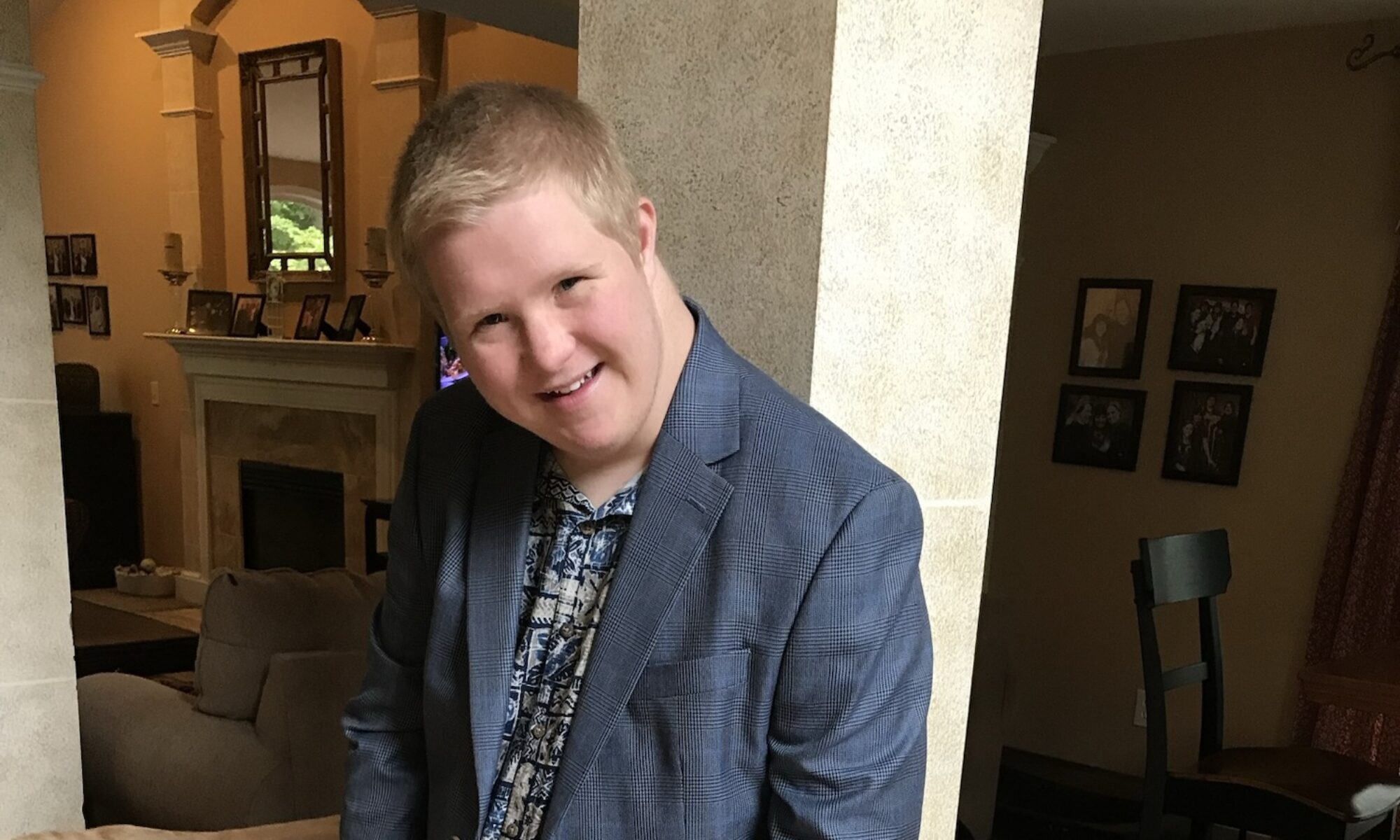
to mask or not to mask?

To mask or not to mask — that is the question.

After the recent ruling by a federal judge striking down the Biden administration’s federal public transportation mask mandate, we’ve witnessed all sorts of reactions. Among the most prominent: 

  • Gratitude
  • Rational concern
  • Irrational fear
  • Celebration

Let me not suggest that a sole response is the right answer. Let no other suggest it as well.

We have different circumstances — different physical conditions, mental aptitudes, and surrounding communities which make varied responses equally understandable. When we speak of mandating masking or not, valid, different approaches exist. 

Unfortunately, as much of the national communication about what’s wise to do when has been ambiguous and inconsistent — and sometimes questionable if political motivations were in play in either enactment or delay — that leads to an even wider range of justifiable beliefs in regard to prudent individual approach.

With all due respect, the messaging has been messy. 

One of the more thought-provoking analyses I’ve read on the end of the mask mandate — as the federal government appeals the decision — comes from Josh Barro in the Very Serious newsletter.

Barro wrestles with how this has situation has played out over the last two years — including that messy, multi-point intersection between government control, individual freedom, public health, and the definition of the common good.

Writes Barro: 

“Mourning the rule we lost yesterday only makes sense if your interest in masks is more about how we should regard COVID than how we should prevent it. That is, if you just liked seeing people forced to make sartorial expressions like your own about how much they care about COVID, then yesterday was indeed a sad day for you.

But the transparent arbitrariness of mask rules was one of the main factors driving cynicism about and resistance to pandemic control measures — when the rules about masks changed from one situation to another with no apparent consistency or link to sensible cost-benefit analysis, of course people concluded that they were being ordered around for no good reason, and they stopped listening. (It certainly didn’t help that so many public officials were spotted breaking the very rules they had imposed.)

The public health establishment still has not grappled with the damage it’s done to its reputation by failing to respect the fact that members of the public have different values and preferences than their own, or to place any value at all on individual freedom. There is a cost to ordering people around all the time, and if you’re too obnoxious about it, your powers to do so will be taken away. This is part of why leaving the transportation mandate in place so long was such a mistake: The more capricious an enforcement measure looks, the more likely it is the courts will find some justification to throw it out.”

As said, when a judge found justification to throw out the mask mandate last week, some were grateful, rationally concerned, irrationally afraid, and some celebrated.

Let me make a case for none of the above.

Let me simply suggest that the values and preferences of the entire public matter.

And messy messaging matters, too.

Respectfully…

AR

who’s afraid of the big, bad Elon?

I’ll be honest. I don’t really have a strong opinion on the pursued Twitter purchase by outspoken tech entrepreneur, Elon Musk. But I am learning there are a whole lot more people who care a whole lot more than I do. All due respect. Always.

Note some of the recent headlines, tweets, and newscast comments…

From former US Labor Secretary, Robert Reich, in The Guardian: “Elon Musk’s vision for the internet is dangerous nonsense.”

From Washington Post columnist, Max Boot, “I am frightened by the impact on society and politics if Elon Musk acquires Twitter. He seems to believe that on social media anything goes. For democracy to survive, we need more content moderation, not less.”

And from MSNBC co-host Mika Brzezinski: “I think that the dangerous edges here are that he’s trying to undermine the media, trying to make up his own facts, and it could be that while unemployment and the economy worsens, he could have undermined the messaging so much that he can actually control exactly what people think. And that is our job.” 

Hmmm.

Interesting that much of the expressed criticism and concern comes from the fact that Musk is currently considered the richest person in the world; it’s concerning when money and public influence are so connected. (Granted, someone might want to tell Mr. Boot that the second richest person in the world is Jeff Bezos, who owns Boot’s newspaper.)

So it makes me wonder… what’s the big ado? What else is in play? Who’s afraid of the big, bad Elon Musk? Any why?

Some say it’s about power. Others say attention for Musk. Others still, suggest it’s about free speech.

Herein is where the crux of the issue lies. It then becomes an issue of potential censorship.

As the social media site currently exists, Twitter reserves the right to make tweets disappear. And not only do they reserve the right to make a specific tweet disappear, “If an account’s profile or media content is not compliant with our policies, we may make it temporarily unavailable and require that the violator edit the media or information in their profile to comply with our rules. We also explain which policy their profile or media content has violated.”

They can dismiss an entire account. They reserve the right to censor.

So let’s ask the next best question: is censorship good?

According to Britannica, censorship is “the changing or the suppression or prohibition of speech or writing that is deemed subversive of the common good.”

According to the ACLU, “censorship, the suppression of words, images, or ideas that are ‘offensive,’ happens whenever some people succeed in imposing their personal political or moral values on others.”

Hence, I’m led to the next best questions…

If censorship is allowed and thus the freedom of speech is not, who gets to decide what gets censored? Who determines the definition of the common good? Who dictates what content the audience should not hear?

Who is capable of imposing their political and moral values on the rest of us?

And when they do, will they tell us their decision-making tools? Will they share with us the thorough analysis they go through in making such a decision? Will they share why they suppress what stories?

And what is their motivation? Is it politically motivated? Are they unfairly biased?

Seeing friend and foe alike, so-to-speak, be inconsistently censored on Twitter, Facebook, etc., my sense is social media attempts at censorship are unequivocally questionable. If the efforts increase — evolving into a more ardent intent to subdue the freedom of speech — that then has the potential to become a dangerous tool leveled at democracy.

But feel free to disagree. Respectfully, of course. There’s no need to be silenced.

Respectfully…

AR

Easter questions for 2022

Millions across the globe have been celebrating Holy Week in recent days, one of the most sacred weeks of the year for the Christian faith. The notable week began by remembering the communal palms and pomp acknowledging Jesus’ triumphal arrival in Jerusalem some 2,000 plus years ago; it ends with the celebration of his resurrection.

I find the week in between fascinating, where between those two momentous events, the same community that celebrated Jesus elected to execute Jesus, killing him in one of the cruelest ways possible.

There really is zero judgment in me whatsoever. My seemingly constantly curious mind simply sits with a couple key questions — questions, I admit — I can’t answer.

Why didn’t they recognize Jesus 2,000 ago?

And…

Why don’t we always recognize him now?

What gets in the way?

Again, I don’t have the right answers. I have no idea what I would have done in that community centuries ago.

I simply find it fascinating that all the world’s major religions include Jesus in their description of reality; they neither deny his existence nor discount the entirety of his wisdom. He is revered and respected in various degrees by our brothers and sisters adhering to Buddhism, Hinduism, Islam, and Judaism. That prompts me to pay attention to his story.

I think of that week leading up to the crucifixion — an event that is acknowledged across diverse, organized religions…

Here Jesus comes into Israel’s capital city, and yet, the crowd seemed to have no idea as to who he was or what he was planning to do. But yet — they celebrate. 

Writes respected author Paul David Tripp in regard to the surging crowd…

“They cry, ‘Hosanna’ (which means, ‘Save us’), but the salvation they are looking for is temporal and political. They think the Messiah will set up an earthly kingdom that will break the back of Roman rule. This is why Jesus cannot be distracted by the adulatory desires of the crowd around him. He knows the hearts of people and how fickle they can be.”

I often wonder if that’s a little how I am some days — looking for salvation in something earthly… looking for love in all the wrong places, so-to-speak. Where am I investing so much time and energy in something lesser? … in things that can’t so-called “save” me or give me a hope that lasts… that’s unshakeable. I wonder where I find faith in what’s temporal… or what my emotions lead me most to… or if I ever crave more from the political arena than it was ever intended — and capable — of actually delivering. Politics will never be a savior. It can’t. I wish we got that. I’m thinking it would change how we treat one another in the current day.

I wonder if that in totality is what gets in the way… we keep looking for salvation in people and places that are incapable of saving us; we keep placing our faith and hope in things that aren’t lasting or able.  

As the week comes to a close, and Easter prompts me to yes, sing but also be solemn and still, I find myself still asking questions…

… being curious…

A blessed Easter to you, friends… Wherever you are on your faith journey, may it be one filled with curiosity, joy, and an unshaken hope that will forever last.

Blessings…

AR

what’s causing inflation?

Inflation is at a 40 year high — climbing to an eye-opening 8.5% in March. Inflation is so high, in fact, it’s negating annual wage hikes and salary increases. 

Take note of the price increase chart prepared by No Labels, depicting the specific extent of this increasingly worsening issue:

Some thought the issue was transitory, believing the increases wouldn’t leave a permanent mark on the economy; they were wrong. Writes Sarah Foster, who covers economic policy for Bankrate: “In the aftermath of the coronavirus pandemic, inflation came back with a vengeance. Ensnared in labor shortages and supply chain bottlenecks, price surges were at first only impacting goods that needed to be produced at a manufacturing plant, from used and new vehicles to furniture and appliances. Then, demand for the lockdown-deprived activities of attending a sporting event or concert, as well as traveling, flying or staying in a hotel surged after consumers emerged from lockdowns with stimulus checks and ramped-up savings accounts.

Those increases were all assumed to be temporary, clearing as outbreaks lessened worldwide and post-lockdown demand calmed. So far, however, inflation has only gotten worse — and it’s spread to even more categories, impacting services, rents, meals out at restaurants, repair and delivery services, as well as apparel and food. All of that highlights one of the key fears about inflation: Once it’s taken off on the runway, it’s hard to turn around.”

Hence, it’s a hard problem to solve. 

So let’s try.

Let’s try by setting a couple of prudent ground rules for our leaders. First, level with us. Too many politicians attempt to defer all blame rather than examine how their advocated practices and policy have contributed to the situation. The conflict between Russia and Ukraine is an excellent example. While it has certainly complicated supply issues, rampant inflation began beforehand; too much money was chasing too few goods. So when “Putin Price Hike” is invoked as the new public narrative, that reveals an ulterior motive in the messaging. Friends, I want to solve the problem. I thus crave that our leaders would level with us. Be humble. Be honest. Stop deferring and deflecting.

And second, work together. Find a bipartisan solution. Just as the White House seems actively attempting to defer all blame, let’s also not direct all blame at the White House. Let’s find a way to solve the problem; it’s affecting all of us.

So says a certain sitting senator, one who consistently advocates for bipartisanship. Like him or not, there is wisdom in Sen. Joe Manchin’s words. The Democrat from West Virginia had much to say after the increasingly negative numbers were released on Tuesday:

“When will this end? It is a disservice to the American people to act as if inflation is a new phenomenon. The Federal Reserve and the administration failed to act fast enough, and today’s data is a snapshot in time of the consequences being felt across the country. Instead of acting boldly, our elected leaders and the Federal Reserve continue to respond with half-measures and rhetorical failures searching for where to lay the blame.The American people deserve the truth about why record inflation is happening and what must be done to control it.

Here is the truth: we cannot spend our way to a balanced, healthy economy and continue adding to our $30 trillion national debt. Getting inflation under control will require more aggressive action by a Federal Reserve that waited too long to act. It demands the administration and Congress, Democrats and Republicans alike, support an all-the-above energy policy because that is the only way to bring down the high price of gas and energy while attacking climate change.”

Yes, all emphasis mine.

Let’s stop the blame game. Level with us. Learn to work together. Leaders, your lack of it is hurting us all.

Respectfully…

AR

Ketanji, consent & qualification

Amidst all the news weekly jockeying for our attention, some issues and events understandably attract significantly more. This past week we saw the war in Ukraine heartbreakingly continue… we saw former Pres. Barack Obama return to the White House and the entire room again excited to see a president… we also witnessed the confirmation of another Supreme Court justice. The 51 year-old Ketanji Brown Jackson, a former appeals court judge with nine years experience on the federal bench, was confirmed by the Senate on Thursday.

For years I’ve struggled with how our legislators treat Supreme Court nominees. Something has just seemed off. Let me be a little more blunt. Something has seemed wrong. Disrespectful of people, disrespectful of the process, and wrong.

Part of the difficulty in accurately assessing the wrongdoing is because oh-so-many justify disrespect of the people or process from one side only. That makes no sense to me.

With the confirmation of Jackson — who will serve as the third black justice, the second current black justice alongside Clarence Thomas, and the first black female justice — I heard more acknowledge publicly the lack of integrity long embedded in the process. 

First, from Sen. Dick Durbin, the Illinois Democrat on the Senate floor last week, when addressing the 4 or 5 senators he believed treated Jackson’s nomination inappropriately:

“We’ve done it, too, on the Democratic side. I’m gonna be first to admit, as I look back in history, there are things that should have been handled better when Republican nominees were before us.”

The admissions continued, as Sen. Chris Coons, the Democrat from Delaware, acknowledged in his sit-down interview with PBS this week. He was asked by PBS, “As you think about the current forces that have increasingly polarized the process and your own votes for Trump’s Supreme Court nominees, do you stand by them? Or do you think in a different world you might have thought about those votes differently?”

Said Coons: “I’ve recently been talking about that with some colleagues. So I was — my office now was John McCain’s office — and I think a lot about John. I was in that exact office with a bipartisan group of senators as Judge Gorsuch was being nominated for the Supreme Court, and a group of us were debating whether we could somehow come up with an agreement to not end the filibuster — the 60 vote threshold for justices — in exchange for allowing Gorsuch to move forward. And as I was digging into his record and philosophy, there was one case, the Hobby Lobby case, where he’d written the circuit court, and I just was really struggling with it. I would say Gorsuch was the closest for me where I knew him, I had a sense of him, his writings.”

Back to the interviewer: “But is it about judicial philosophy or advice and consent?” [Note: all emphasis mine.]

Coons: “That’s the point. That was the point at which I first voted against a nominee for the Supreme Court not based on his qualifications; he’s eminently qualified, great temperament, good writer, strong record of service. But I disagreed with his philosophy.

And Senator [Lindsay] Graham and I had a very forceful exchange at that point, where he said to me, ‘I voted for [Justice Elena] Kagan. I voted for [Justice Sonia] Sotomayor. If you’re not willing to vote for Gorsuch, what’s that mean?’

And so I will own that I’m a part of this problem — and recognize that with Senator Graham saying in this [Jackson’s] process — he’s voting against her — he was the last one on the committee who had a history of voting for qualification, not for or against philosophy.”

And therein lies the problem. Being qualified matters less than sharing political philosophy. On the left. On the right. And we only point it out when the other side does it; we make excuses for our own entrenched pathways of political thinking.

One of the wiser, non-politically-motivated voices in Ketanji Brown Jackson’s judicial pursuit came from the former Speaker of the House, Paul Ryan, the Wisconsin Republican. Ryan and Jackson are related by marriage. 

Said Ryan: “Our politics may differ, but my praise for Ketanji’s intellect, for her character, for her integrity, it is unequivocal. She is an amazing person, and I favorably recommend her consideration.”

I wish our politics quit impeding our ability to see who’s qualified.

And amazing. On all sides.

Respectfully…

AR

what’s the biggest problem in the world?

Asked by a wise friend: “What do you think the biggest problem in the world is?” And, “Who do you think is responsible?”

Our minds wander in well-crafted webs hailing from all sorts of angles…

What’s the problem?

Climate change
Coronavirus
Crime
The economy
Education
Gas prices
Gender confusion
Gerrymandering
Healthcare
Inept political leadership
Inequality
Inflation
Injustice
Militant feminism
Partisanship
Poverty
Supply chain issues
Systemic oppression
Toxic masculinity
A victimhood mentality

And more, of course.

Who’s responsible?

Democrats
Republicans
Socialists
Google
Social media
Mass media
Academia
Atheists
Evangelicals
Jews
Muslims
The young
The old
The rich
The famous

And also more, of course.

Fascinatingly, we each have an opinion on all of the above. We each, too, oft fall prey to the foolhardy mental refrain, muttering something along the lines of “Thank God I’m not like those other people!”

Better yet… “Thank God I’m not a Democrat!”… “Thank God I’m not a Republican!”… “Thank God I’m not like them!”… The emphasis is always on “them.” And just like that, we absolve ourselves of any contributory role; we blame the totality of life’s biggest problems on someone other than self. To be clear, that’s a really easy thing to do.

Easy, but not necessarily wise. Nor accurate.

As of this writing, there are approximately 7,938,319,197 people in the world. That tells me that there are approximately 7,938,319,197 people contributing to the biggest problems in the world today.

How would it change our mindset if we realized that? How would it change the way we interacted with others? How would it move us from individual postures of unrealized arrogance to those of attractive, contagious humility?

My guess is that as long as we hold someone else wholly responsible — with no admission of individual involvement — via either action, conviction or even quiet disposition — the world’s biggest problems will continue to swell.

Hence, in a world that’s so obviously, incredibly broken, let’s be brokers of peace. Let’s bring peace as opposed to subtly or not so subtly contribute to chaos. Let’s start with humility.

Respectfully…
AR

what’s most (and still) conflicting about the Will Smith slap

After the slap heard round the world, I must admit there’s one thing I still can’t wrap my brain around. It’s just conflicting. I don’t understand.

Please don’t assume I understand why Will Smith got up and hit, slapped, whatever-you-want-to-call-it presenter Chris Rock. He was presumably offended at the ridicule of his wife; we do a lot of foolish things when we quickly assume a position of offense.

All sorts of editorials have since run rampant…

From… how Smith should have been arrested… violence is wrong… Smith “stole” the Williams sisters’ story… his succeeding resignation from the Academy… how this hurts his family brand… what wife Jada thinks… what we should all know about alopecia… the defense of black women… how a racist society is to blame… how toxic femininity is to blame… how former Pres. Donald Trump is to blame… how Chris Rock is to blame… how Rock is processing the situation now…

And no doubt cumulating in yesterday’s LA Times editorial entitled “Everybody has an opinion on Will Smith. Why the slap resonated.”

Still, not what most fits on my things-that-make-you-go-hmmm list.

After the slap while Rock was presenting the Oscar to the best “Documentary Feature,” two more awards were acknowledged prior to “Best Actor,” which Smith won for his portrayal of the father of Venus and Serena Williams.

Then…

Even with the stunning slap fresh in their minds, the audience gave Smith a standing ovation.

Envision that with me for a moment. Maybe no more than 30 minutes passes between incident and acknowledgement. The audience still cheers. On their feet. Extended applause.

Hear no judgment from me; that’s not the point. I’m sure it was difficult to know how to act in the present moment; and remember: most of these persons are actors.

But the disconnect comes from a collective group of people who for some reason, increasingly more, oft feel empowered to play a sort of societal moral compass. Actors frequently use their stage and celebrity to shame or belittle persons who hold diverse opinion, not truly valuing those who are different than they.

Maybe the issue is us. Maybe we’ve come as a society to celebrate celebrity so much, that we’ve been lax in examining the character of the one who feels so empowered. Maybe, just maybe, we’ve confused celebrity with credibility. Both have value, but they are distinctly different.

Let us be certain to not suggest all celebrities fit into the above, potential hypocrisy… Sandra Bullock, Queen Latifah, and Denzel Washington, to name a brief few. I’m not aware of any moment they’ve felt justified in their adulthood to publicly shame those of any perspective.

And to be clear, celebrity or not, we hold a lot of perspective — just as the LA Times editorial page suggested. What’s also true is that not every perspective or opinion needs to be shared. Also, celebrity or not.

Actors indeed have a gift. Their talent and expertise is in entertainment.

Such is a keen reminder. Entertainment is one thing. Influence is another.

When an actor then attempts to influence us in the socio-economic-political arena, let us remember that it’s ok that they, too, hold strong opinion, but their credibility is not established by their celebrity… What’s their expertise? How thoroughly have they researched the issue? What diverse voices are they listening to? Are they living in a likeminded bubble? And in arguably the number one credibility killer, are there any they feel justified to shame?

No disrespect, friends.

I’m simply conflicted that celebrities found reason to stand.

Respectfully…

AR

the best “brackit” & a little bit more

To illustrate the main point of today’s post, we could focus on the recent, 94th Academy Awards. But Hollywood seems increasingly less popular and even lesser in touch with the totality of society. Sometimes I think we celebrate the wrong things. This year’s show, no less, got exponentially more attention; granted, it had nothing to do with the movies.

We could also illustrate our main point by focusing on the pair of NCAA final fours: Duke, North Carolina, Kansas and Villanova will grind it out on the gridiron for the men; UConn, Stanford, South Carolina and Louisville will compete for the women’s crown.

That’s the point: a singular crown… society’s passion for a sole victor.

Seven years ago we penned a post that to this day still makes me smile. It’s simply a sweet way God works when the wisdom comes from the mouth of a babe. We think we know so much; sometimes the “babes” know more… and we can actually see it/learn from it/grow if we are humble and willing enough to learn.

The Intramuralist then focused on our need to always “pick one” — emphasis on the one. We make everything a competition… from TIME’s “Person of the Year” to People’s “Sexiest Man Alive” to “Best New Artist,” “Best Picture,” “Best Actress” and “Best Actor” — the latter to whom there’s little need to pay more attention to at the moment. 

The point is that we crave picking one. 

I’m simply not sure that’s always necessary or wisest. I’m also not alone in that thinking.

Hence, in illustrating the main point of today’s post, allow me to share a bit of a common pastime. According to the American Gaming Association, roughly 70 million NCAA Tournament brackets are filled out each year. A majority of us submit more than one, with it estimated that some 40 million Americans take part in this process. Our family is no different. Seven years ago, my “babe” taught me more… 

I was keenly struck by something I found wadded up. This sheet was crumpled in the corner in one of my son’s upstairs bedrooms (…I know… shocking that I would find anything on the floor of a teenager’s room…).

Yet when I slowly unfurled this crumpled sheet, I found a goldmine of wisdom. Here, roughly designed with undoubtedly valiant efforts at perceived symmetry, was a bracket created by my 13 year old, sports fan son with special needs.

He did not use a pre-printed bracket, however; he crafted his own.

On both the left and the right, he drew slots for 16 teams, thus including 32 entries. But this bracket had a different title up top. It said nothing about the Men’s NCAA Tournament Championship. Instead, boldly printed on the top of the page was:

“BRACKIT FOR BEST MAN AND TEAM”

Then down the sides of the page, I sat still as I read the names. 

There I would find the listings of my son’s father…

… and his brothers… 

… some aunts, uncles, grandparents, and cousins, too.

I did chuckle at one point — realizing Josh must have ran out of names to write — when added to his most creative “brackit” were LeBron James, the University of Florida, and Zipper, our cat. But I loved and absolutely admired his precious list.

My only pondering was why he never completed the bracket — why it was instead crumpled up and discarded to his floor. 

So I soon found my sweet son and asked him, “Tell me. Why no best man and team?”

To which my wise son instantly responded. The babe didn’t miss a beat. He said, “There are lots of good teams. It doesn’t matter. Winning and losing are the same… if you win, you’re awesome; if you lose, you’re still awesome.”

No one had to win.

Out of the mouth of babes… oft they are wiser than we…

Respectfully…

AR

updated media bias

As multiple media voices seem to amplify their chosen angle, it’s helpful to know who is who and what their bias is in order to avoid manipulation, fake news and misinformation. To be clear, sources on both the left and right engage in intentional manipulation, fake news and misinformation. Just as we watched last week’s developments in the Ukraine, the hearings surrounding Supreme Court judicial nominee, Ketanji Brown Jackson, and the current state of both our national economy and local school boards, bias is rampant. On all sides.

Hence, allow me to share the updated analysis from the more articulate AllSides, a respectful, noninflammatory organization, which acknowledges it’s actually okay to be biased; in fact, there most likely is no such thing as totally unbiased news. But hidden bias is the problem. In the words of AllSides, “hidden media bias misleads, manipulates and divides us.”

Think widely sharing a perspective from either CNN or FOX News is helpful in discerning truth? … Are we convincing or dividing?

Are we helping form objective opinion? … Or are we unknowingly participating in attempts to manipulate opinion?

My sense is the CNN’s and FOX News’s of the world only fuel the likeminded; it seems more the fruitless act of preaching to a partisan choir — or subtly shaming those who’ve yet to sing our desired tune. Hence, the Intramuralist believes it to be prudent to be intentional in what we read, listen to, and share, promoting reason and objectivity.

Based then on multi-partisan, scientific analysis — online content only — here is AllSides recently released, updated Media Bias Chart. In these findings — analyzing the results of their blind bias study for February — NPR moved from “center” to “lean left” (remember: this is for online content only — no radio is relevant here). Insider moved from “center” to “lean left.” Newsmax moved from “lean right” to “right.” And NewsNation was added, with an initial rating of “center.” (Cheers to those in the center, if I may…)

The current analysis looks as follows:

From www.allsides.com “Media Bias Chart”

Remember that AllSides differs from other bias assessments because data is gathered from people across the political spectrum. It’s not based on just one biased individual nor on singular methodologies, algorithms or homogenous groups. They have been assessing media bias since 2012. Also, if one searches their site, one can easily glean how they arrived at a particular rating bias. They are not attempting to manipulate us; they are attempting to help us not be manipulated.

Respectfully…

AR

from people inside Russia

No doubt we learn from one another. If willing.

We sharpen one another. We grow. Become wiser. Learn more. And as passionate about our perspective as we may be, it is always prudent to invite the respectfully-stated perspective of another… especially from those closer to the situation and outside our insulated, likeminded “tribe.”

With what continues to evolve and digress in Ukraine, I invited a trusted friend — who has a far closer vantage point than most — to speak a little more into the issue. What’s it like inside Russia?

Listen. Learn. This isn’t fluffy stuff.

But it’s reality for another part of the world…

In the big-bangs era of the 80s, my university roommate, AR Miller and I used to stay up till 3am discussing whatever questions about life and the universe were niggling at us that day. Our bond was an insatiable joy in the art of curious wonder and reflective learning. Pay attention, look back, look right, look left, look ahead. Talk to each other. 

I’ve worked my last 26 years consulting for small businesses in Eurasia and Russia, assisting families displaced by war. My foundational language-culture primer came from an ethnic Chechen, “You have to understand, shame, not guilt, drives us. We step towards the future with our faces to the past.” 

Try that! Stand up. Walk forward while facing backwards. What’s that like? It changes your point of view. It changes the directional labels. It changes the frame of reference. What defines “forward?” And what is “backwards?” 

Putin’s Kremlin has for 20 years held hostage an extraordinarily diverse citizenry as he faces the past, stepping towards his preferred future of a nationalistic, anti-western (even xenophobic), Russian-dominated Eastern Orthodox, totalitarian state. The 1800s were labeled “the great game” between the British, Ottoman and Russian empires. The 2000s, may one day be known as “the great get back.”

What does Mr. Putin want? By his own words, to avenge a generational dishonor — to create the conditions that Belarus, Ukraine, Georgia and Armenia are heeled under the central authority of Moscow’s Kremlin and Russian Orthodox Patriarchy. 

To synthesize from Alexsandr Verkhovsky, of the Sova-Center for information and analysis, Dominic Rubin, Fiona Hill, Anne Applebaum, Catherine Belton (UK), Oliver Bullough (UK), Karen Dawisha (U of Miami, OH), Mr. Putin is a man aggrieved from a visceral shame of dishonor unavenged; when the Union of Soviet Socialist Republics (USSR) broke up in 1991, Russia, Belarus, Ukraine, and the Caucasus Eastern Orthodox republics of Georgia and Armenia, opted for independence, rather than alignment with Russia. Mr. Putin leveraged his KGB foreign service experience, his law school education to become St. Petersburg’s foreign business kingpin. He meticulously, patiently developed a financially opaque global patron/client loyalty network of Oligarchs (super rich people) pilfering and privatizing state companies, so long as they paid tribute. Simultaneously, he decimated Chechnya, annexed Ukraine, decimated Syria, and is now again, decimating Ukraine. Putin never hesitates to wield first-strike, brutal, coercive violence to abuse power, to get subjects and clients to heel. Ukraine is just the most recent example. The result of this are people fear-conditioned into loyalty alignments, “subjects” not citizens. Since 2008, Putin carefully kicked out thousands of foreign NGOs, charities, and imposed increasingly central authority onto 90 nationalities across 11 time zones, where individuals are rendered powerless. 

People inside of Russia are humiliated now, and deeply self-reflective: “Putin’s abusive power is a big problem, but not the sole problem.” We have a symptom of historical, authoritarian racism, where whole nations are relegated to the status of soil, dirt, and graves. While Slavic Russians are the majority, there are 4 million Tatar, 6 million Bashkir; 10 million people and 45 tribes in the North Caucasus — The Circassians, Chechens, Ingush, Nogai, Balkar, Kumyk, 34 tribes in Dagestan alone; Armenians, Georgians, Azerbaijanis; Tuvans and 40 more Siberian tribes; the Kalmyk Buddhists. The soil of the Jews had already been taken during the Holodomor and Holocaust — what once was the Pale of Settlement is now Belarus and Ukraine, ethnically cleansed. The consequences have already cast their shadows over many generations.      

Respectfully…

~ Name withheld