the day after

[Beautifully written by Jennifer Finney Boylan, a contributing opinion writer for The New York Times, published 3 years ago…]

* * * * *

It was my first Boxing Day in retail. There I was, sitting at the returns desk at Classics Books in Midtown Manhattan, 1980. A woman in a mink coat angrily dropped a volume upon my desk: “Mommy Dearest,” by Christina Crawford.

“I’m returning this — this piece of trash!” she said.

“Was there something wrong with the book?” I asked. She’d received it just the day before.

Her eyes narrowed. “Joan Crawford,” she said, “was a wonderful mother!”

The day after Christmas is a hard day to work in retail, what with all the returns and exchanges. At least Black Friday is just about sales. So many people. So much disappointment.

We don’t have a proper name for the Day After here in the States, although it’s definitely a good time to stay home if you can. It’s a day for reflection, for eating leftovers, for taking stock of the year just past.

In England, it’s Boxing Day; in Ireland and elsewhere, it’s St. Stephen’s Day. When I was a student in London, my professor, a Briton, explained that it was called Boxing Day because it’s the day disappointed children punch one another out.

For years I trusted this story, which only proves that there are some people who will believe anything, and I am one of them.

The real origins of Boxing Day go back to feudal times, when workers on a lord’s estate would ask, on this day, for a Christmas box, in exchange for good service throughout the year. Later, the tradition expanded to include the collection of alms for the poor.

In Ireland, St. Stephen’s Day brings the appearance of the Wren Boys — costumed revelers engaged in a ritualized hunting of a wren. The best-known Wren parade happens in Dingle, in County Kerry. There’s a lot of marching around and collecting of money, some of which goes to charity and some of which — according to at least one of my Irish friends — goes to pay for a round at the pub. The veneration of the wren predates Christianity, in fact: The Irish word for wren, “dreoilin” — comes from two words, “draoi ean,” the druid bird.

There are lots of songs that go with this revelry. I always liked the Grateful Dead’s “St. Stephen,” which speaks of the “country garden in the wind and the rain; wherever he goes the people all complain.”

And I like the one the Chieftains sing: “The wren, oh the wren he’s the king of all birds/on St. Stephen’s Day he got caught in the furze/So it’s up with the kettle and it’s down with the pan/Won’t you give us a penny for to bury the wren.” The wren symbolizes winter, as the robin represents summer, and “burying the wren” means the coming of longer days.

Then there’s “The King,” which Steeleye Span covered years ago. In Victorian times, this tune accompanied the presentation of a wren-king, hidden inside a box, dressed in silks. In exchange for a donation, you could get a glimpse of the king. (“Joy, love, health and peace, be all here in this place/By your leave we will sing, concerning our king/Our king is well dressed, in silks of the best,/wearing ribbons so rare, no king can compare.”)

Who was St. Stephen, and what does he have to do with Christmas, or Christians? Stephen was the faith’s first martyr, slain for suggesting, among other things, that God was not to be found in the temple, or in any dwelling made by human hands.

As a Christian, I can promise you I fall short in lots of ways, especially in my consistent failure to treat other people with the love and grace they deserve. But on the issue of the temple, St. Stephen and I are of one mind. Most of the times that I’ve experienced the eternal are times when I was not sitting in an actual church.

Exactly 40 years ago, in fact, on St. Stephen’s Day 1978, I was staring into a fire at a beach house in Atlantic City with some friends. As I sat there looking at the flames, I heard a voice as clear as a bell, speaking out of my own heart: How long, the voice inquired, do you intend to avoid becoming yourself?

A little while longer, I thought.

This year, on St. Stephen’s Day, I’m almost certain to find myself by a fire once again, looking into the flames, thinking about the road that lies ahead. My daughter, who spent the holidays in Maine with us, will be leaving that morning, stepping onboard an airplane bound for Australia, where she will be joining her fiancé’s family, halfway around the world. I don’t know when I will be seeing her again. Soon, I hope.

From the woods outside comes the voice of the wren. The light returns.

* * * * *

Merry Christmas, friends…

AR

before Christmas

I Heard the Bells on Christmas Day
Their old familiar carols play,
And wild and sweet the words repeat
Of peace on earth, good will to men.

I thought how, as the day had come,
The belfries of all Christendom
Had rolled along the unbroken song
Of peace on earth, good will to men.

And in despair I bowed my head:
“There is no peace on earth,” I said,
“For hate is strong and mocks the song
Of peace on earth, good will to men.”

Then pealed the bells more loud and deep:
“God is not dead, nor doth he sleep;
The wrong shall fail, the right prevail,
With peace on earth, good will to men.”

Till, ringing singing, on its way,
The world revolved from night to day,
A voice, a chime, a chant sublime,
Of peace on earth, good will to men!

* * * * *

I’ve long posted the words from this enduring Christmas hymn, written by Henry Wadsworth Longfellow, because it so feels like it puts life in perspective. 

Longfellow was the widowed father of six. His wife died from a tragic accident in which the dress she was wearing caught on fire. His oldest son was severely injured during a battle of the Mine Run Campaign. He was reunited with his injured son on December 5th, with the army surgeon sharing that his son’s wound “was very serious” and that “paralysis might ensue.”

Only 20 days later, on Christmas Day 1863, Longfellow “wrote a poem seeking to capture the dynamic and dissonance in his own heart and the world he observes around him.” Hence, the rest of us were gifted with the embedded wisdom of “I Heard the Bells on Christmas Day.”

Amidst the outer chaos of the culture and the inner chaos in one’s own heart, peace is still available. Hope, too. That hopeful confidence has the power to pierce all chaos. 

That, my friends, puts life in perspective.

Respectfully…

AR

the week before Christmas and all through the house

We basically have one week. I speak not of the number of shopping days left. Neither do I dismiss the beauty of the recent Hanukkah celebration. 

I speak of how many days left we get to practice. Or at least think we do.

Knowing Christmas is coming, the goose is (or we are) getting, uh, larger, the festivities have begun, cards are in the mail, and we have a week to practice. We have a week to focus on what is best…

… bringing good cheer…

… from everywhere… fill the air…

Maybe that’s one of the three zillion things I love about Christmas. As a Christ-follower or not, there exists a societal focus on what is best…

… the beauty of rest…

… tidings of comfort and joy…

We’re generous in hospitality. We’re more thoughtful of others. We’re mindful of those who are dear to us — here or here no longer. We also are aware that we have a role to play…

… let there be peace on Earth…

… and let it begin with me.

That’s actually one of the harder things about being a semi-humble current events blogger. Allow me to briefly elaborate.

In our desire to cover what’s current and talk about what people are talking about, we strive to be relevant and thus aware of what’s actually going on. In 2021, as a country we found ourselves attempting to navigate through multiple fairly sticky issues. For example:

  • The economy and jobs, including the labor shortage and “great resignation”
  • A near 40 year high for inflation; our dollar is worth increasingly less
  • Covid-19: an appropriate response by both the people and government; how far should each go?
  • A dire surge in crime; understanding why there is such an increase especially in homicides and looting
  • Shaky foreign affairs, noting Afghanistan, China and Russia

Not to negate the very real challenges in education, equality, and justice, etc.

Friends, these are tough issues. None will immediately dissipate simply because we turn the calendar to 2022.

But I have this thought that we might be better at solving the issues or at least making progress if we carry forward our focus from the week ahead…

Good cheer fills the air from everywhere… not just on my side of the proverbial political aisle…

Rest, comfort and joy should be encouraged to all by all… not just to those whom I like how they think…

And peace…

Too often people proclaim they want it, wish for it, and conclude that thought with “hey, you go first.” In other words they act as if peace begins with someone else…

If only the Democrats… If only the Republicans… If only white people… If only persons of color…

My sense is a far healthier, more productive statement — for those who want both peace and progress — is… “if only me…

Tidings of good cheer can fill the air all year round. We can make progress. We can navigate through the hard stuff… if we remember that peace, progress and solution never start with somebody else.

Respectfully… enjoying the week to come…

AR

what if you’re wrong?

The best thing I’ve read this past week was a piece written by Ronald Bailey for the January 2022 issue of Reason. He takes a humble stab at attempting to answer the age-old question of why — especially in politics — is it so hard to admit we are wrong.

Writes Bailey…

“Today, if you are a member of one of the two major American political parties, you are statistically likely to dislike and distrust members of the other party. While your affection for your own party has not grown in recent years, your distaste for the other party has intensified. You distrust news sources preferred by the other side. Its supporters seem increasingly alien to you: different not just in partisan affiliation but in social, cultural, economic, and even racial characteristics. You may even consider them subhuman in some respects.”

I think of the plethora of posts and tweets, likes, dislikes, and exaggerated reactions we feel emboldened to broadcast on social media. Few seem to share abundant admiration for the political ideals with which they most align; increasingly more pounce on the perceived lack of integrity of the other… like only one of the parties is supposedly destroying America… forgetting, of course, the reality of taking two to tango, so-to-speak.

Bailey continues…

“You’re also likely to be wrong about the characteristics of members of the other party, about what they actually believe, and even about their views of you. But you are trapped in a partisan prison by the psychological effects of confirmation bias. Being confronted with factual information that contradicts your previously held views does not change them, and it may even reinforce them. Vilification of the other party perversely leads partisans to behave in precisely the norm-violating and game-rigging ways they fear their opponents will. It’s a classic vicious cycle, and it’s accelerating.”

And there we have it. It’s not that we might be… it’s not that we could be… it’s that we’re likely to be wrong. Wrong about other people. But emboldened about self. Maybe that’s the primary impetus of the current cultural, socio-political deterioration.

Last week I had the sweet opportunity to share a conference call with former Senator Joe Lieberman, the “Independent Democrat” from Connecticut. As national co-chair of No Labels, an organization that steadfastly works to encourage bipartisan, commonsense solutions to problems — and an organization to which The Intramuralist belongs — Lieberman shared some  significantly keen insight, answering questions from a few of us, discussing, for example, the current shakiness and danger in foreign affairs, how to communicate the effectiveness of a more centrist approach with the Next Gen, and how the current administration has been pulled markedly left. It’s fascinating to dialogue with a person of integrity, who actually knows and has enjoyed a positive, respectful relationship with Joe Biden, Lindsay Graham, and John McCain, among others.

But there was one insight that caused me to linger.

When Lieberman was addressing how we got to this point, he made a simple, profound point.

His response was in regard to how biting Congress has become. So addressing sitting senators in particular, as that was his experience, Lieberman said simply, “They don’t know each other.”

He spoke of how historically, if one was honored to be elected to go to Washington, you took your family and stayed all week. The families would then hang out on weekends — regardless of party. They did stuff together. When you do stuff together, you get to know each other. And when you get to know each other, you learn to trust and respect each other. You may not nor ever share the same opinion, but you know why another believes (and votes) the way they do.

But now our elect go home. They leave early. Weekends are never spent with those they don’t know.

Hence, back to Bailey for a minute; his insight is fascinating (access HERE). He shares significant research in multiple areas where Democrats and Republicans think they know what the other believes, but alas, they do not. Highly intelligent people don’t know what they don’t know. And that lack of knowledge — that lack, better yet, of relationship — is far more damaging than any one party.

If we knew that, if we worked to know the one who thinks differently, maybe we could see where we — not others — are wrong.

Respectfully…

AR

Smollett, the victim

Multiple legal trials have vied for our attention in recent weeks. It’s been interesting observing the verdicts unfold. It’s been equally interesting observing those who have strong opinions on what the verdict should/should not be. No judgment, friends. I get it. I’ve done it, too. I’ve also gotten to a place in life where I’ve realized that if I’m not in the courtroom, most likely my perspective is narrow and thus my view incomplete.

One trial has prompted increased ponder on my part. I speak of the legal fate of Jussie Smollett, the biracial American actor who was found guilty of staging a fake hate crime about himself.

As one who’s big on mercy triumphing over judgment, let me encourage no pouring on of shame on Smollett. Chances are his professional career will forever be derailed, and he alone will have to wrestle with his choices. No need to make it worse.

But what intrigues me is something bigger. When Smollett told police in January of 2019, that he was attacked by two Pres. Trump-supporting men, using racial and homophobic slurs, who beat him up and tied a noose around his neck, the bottom line is he was doing one thing: he was making himself a victim.

In a succeeding television interview with Good Morning America’s Robin Roberts — an interview she would later say was a “no-win” situation, as she, too, is a gay person of color — Smollett got angry and cried, indignantly sharing his self-invented horror and how dare anyone doubt it… “I’m p—ed off… At first it was a thing of like, ‘Listen, if I tell the truth, then that’s it — cause it’s the truth.’ Then it became a thing of like, ‘Oh, how can you doubt that? Like how do you not believe that? It’s the truth.’”

That was all a lie. The story. The horror. The feigned indignation. All untrue.

What intrigues me today, though, isn’t as much the prodigious unhealthiness that would prompt an individual to intentionally, inaccurately paint oneself as a victim, but rather, how attractive victimhood is to us.

Note in the immediate, 24 hour aftermath of the reported assault — not known yet to be a hoax — what was publicly said about Smollett:

From then presidential candidate Joe Biden: “What happened today to @JussieSmollett must never be tolerated in this country. We must stand up and demand that we no longer give this hate safe harbor; that homophobia and racism have no place on our streets or in our hearts. We are with you, Jussie.”

From then Sen. Kamala Harris: “@JussieSmollett is one of the kindest, most gentle human beings I know. I’m praying for his quick recovery. This was an attempted modern day lynching. No one should have to fear for their life because of their sexuality or color of their skin. We must confront this hate.”

Except that it wasn’t. It wasn’t hate. It wasn’t homophobia. It had nothing to do with Smollett’s skin color or sexuality.

So why did people immediately assume what Smollett said was true? Biden and Harris were by far not alone. Why did people not only believe Smollett was speaking truth, but also use his self-invented story of oppression to call out a bigger narrative and assume the worst of other people?

Why — with all due respect — are we so attracted to a victim?

Not knowing Smollett, I have actually no idea what was in his head… Was he trying to divide us more? … Was he trying to start a race war? … Was he hoping to advance his acting career? … Who knows. But my guess is, whatever the motive, he knew that America likes a good victim; he knew we would work to empathize. He must have also believed that our affinity for his shared suffering would prompt us to omit the scrutiny of his lie. He utilized victimhood to veil truth.

I will say I am bothered by how Smollett’s chosen behavior may affect future, actual victims. Oppression of any person — on the basis of race, sexuality, age, ability, you name it — is unholy and immoral. 

I am also bothered, no less, by how in our attempted empathy, how fast many were to assume the worst of others. Because Smollett’s tale fit into a narrative that fits how some of us think, truth mattered less than the narrative. Allow me to respectfully rephrase: truth did not matter.

Friends, we have work to do in this country. In a democratic, free society, such will always be the case. Eden doesn’t happen this side of eternity. But a point I think we’re poignantly missing — which was glaringly evident in the foolish fraud of Jussie Smollett — is that victimization is not a virtue.

Let us empathize always. But let empathy not blind us to what is true.

Respectfully…

AR

acting worthy of American ideals

Robert Joseph Dole passed away this week. Coming from humble, meager beginnings, he was a phenomenal high school athlete, on his way to potentially continuing that stardom at the University of Kansas. His collegiate and athletic career, however, would be interrupted by World War II. Dole enlisted in the United States Army. Note: this blog post is not about Robert Joseph Dole.

Prior to the point of today’s post, allow us to share a brief bit more context on Bob Dole. Please put all partisan hats aside (p.s. like most times, they are not very helpful).

Engaging in combat as a second lieutenant in the Army’s 10th Mountain Division, Dole was seriously wounded near Bologna, Italy. A German shell shattered his collarbone and part of his spine. Dole initially believed his arms were no longer attached.

Inspired by the professional expertise and personal encouragement of a Chicago orthopedist, when facing a grueling, potentially physically compromised future, Dole made the decision to “focus on what I had left and what I could do with it, rather than complaining what had been lost.”

He went on to earn his law degree. He then served in politics. He represented Kansas in the U.S. House of Representatives. Then the U.S. Senate. His 27 year Senatorial career included years on the Senate Agriculture Committee, Senate Finance Committee, and even as the Senate Minority and Majority Leader. He ran for President multiple times, becoming the Republican nominee in 1996, eventually losing to then Pres. Bill Clinton. He had long career in public service.

After he passed away on Sunday, it was fascinating to hear what a bipartisan group of leaders said…

“Bob Dole dedicated his entire life to serving the American people, from his heroism in World War II to the 35 years he spent in Congress. After all he gave in the war, he didn’t have to give more. But he did. His example should inspire people today and for generations to come.” — Former Pres. Bill Clinton

“This good man represented the finest of American values. He defended them in uniform during World War II. He advanced them in the United States Senate. And he lived them out as a father, husband, and friend. — Former Pres. George W. Bush

“His sharp wit was matched only by his integrity, and he lived his life in a way that made it clear just how proud he was to be an American, and how committed he was to making this country everything he knew it could be.” — Former Pres. Barack Obama

“Bob Dole was an American war hero and true patriot for our Nation.”  — Former Pres. Donald Trump

“To me, he was also a friend whom I could look to for trusted guidance, or a humorous line at just the right moment to settle frayed nerves.” — Pres. Joe Biden

“Whatever their politics, anyone who saw Bob Dole in action had to admire his character and his profound patriotism. Those of us who were lucky to know Bob well ourselves admired him even more.” — Sen. Mitch McConnell (R-KY)

“Bob Dole served his country with courage on the battlefield, and with dignity in the Senate. Jane and I send our condolences to his family.” — Sen. Bernie Sanders (D-VT)

“His courage and dedication to this country are an inspiration.” — Rep. Steve Scalise (R-LA)

“Upon receiving the Presidential Medal of Freedom, Senator Dole challenged us ‘not to question American ideals or replace them, but to act worthy of them.’ Senator Dole lived up to this challenge, devoting his entire life in service to the county he loved and to our cherished national values for which he fought.” — Speaker Nancy Pelosi (D-CA) 

This is only a short sampling, but I love how a bipartisan group of leaders paid tribute to the former Senator. His party affiliation did not detract from our leaders’ clearly wise instinct — that honor of others is good.

(But again, this isn’t about Bob Dole.)

Our leaders would act wiser if honor was given to all, regardless of political affiliation, right now, across the aisle, with whom they currently serve. It shouldn’t take passing away to say and do what’s right.

Respectfully…

AR

PlayStation, prices & the problem with partisanship

It isn’t rocket science to acknowledge we’re experiencing a shortage of many things these days…

Labor…

For months we’ve heard employers bemoan they simply can’t find enough people to work. Labor experts tell us workers haven’t returned after the onset of the pandemic; some lost their jobs; some retired early; some quit because — according to a recent Indeed survey — “life is too short to stay in a job” they aren’t passionate about. I spoke this week, in fact, with a friend attempting to hire an administrative medical professional at their small business. After a thorough screening process, four interviews were scheduled; zero applicants showed up. America’s labor is in increasingly short supply.

Groceries and household goods… 

I’ve tried to get an accurate read in regard to what’s actually scarce. Reviewing the analysis of multiple market experts, it seems grocers are challenged to fully stock the following: bacon, beef, bottled water, bread, canned pumpkin, canned vegetables, carbonated drinks, chicken, cooking oil, evaporated milk, frozen meals, juice boxes, ketchup packets, liquor, Lunchables, oat milk, paper towels, pasta, pasta sauce, pet food, tofu, toilet paper, tomato paste, and turkey. The list continues to soar. Says Jim Dudlicek, a representative for the National Grocers Association, there simply aren’t enough people to “make the goods, move the goods and sell the goods.” America’s groceries are in increasingly short supply.

There are more things in which we are experiencing a shortage… rubber, lumber, even blood. Housing is a challenge. Diapers. New cars. Noting Christmas is coming, gaming consoles are also in short supply. (Sorry, PlayStation, Xbox, and Nintendo fans. Being naughty or nice isn’t going to matter this year.)

In all these things, not only is less available but we are paying significantly more…

Groceries are higher than they were just a year ago…

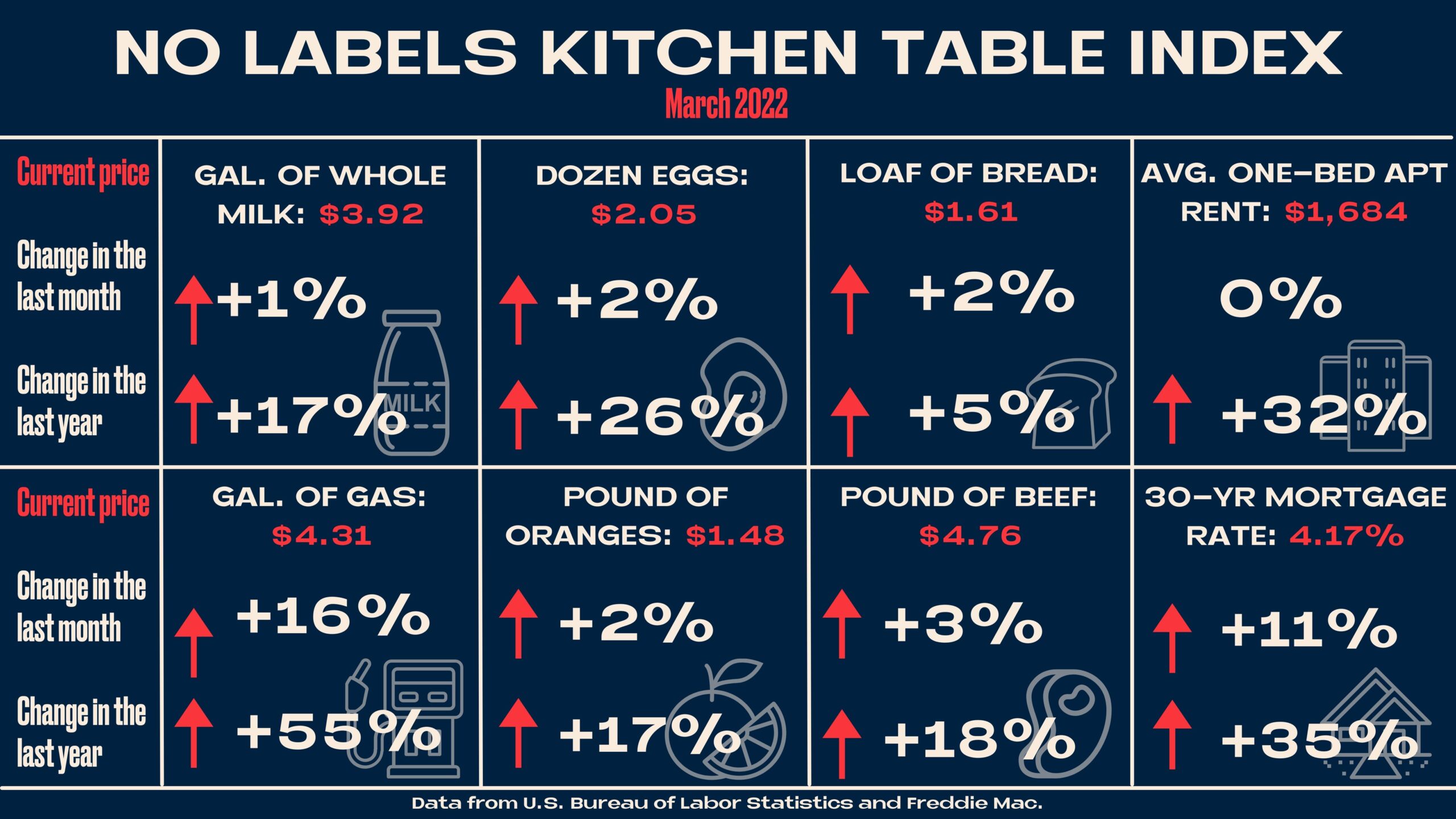
Steaks are up 24.9%. Eggs are 11.6% more expensive. Chicken, 8.8%. Cereal, 5%. Baby food, 7.9%. Other prices — rent, cars, gas, energy — they’re up at least 6.2% in one year’s time. [Note: all percentages reported by the Bureau of Labor Statistics.] As said, it isn’t rocket science to see we have a problem.

So what are we to do?

To be clear, we’re experiencing the highest annual rate of inflation we’ve seen in 30 years. Again, it’s not rocket science, but something’s wrong. Inflation is a general increase in prices accompanied by a decrease in the purchasing power or value of money. That’s part of the concern with the government attempting to infuse more money into the economy right now. More money won’t change the amount of goods available; but if the money supply increases faster than output — which is why the labor shortage is significant — inflation may become even worse.

So back to what we’re to do…

I’ll be honest. I’m no economist. The Intramuralist has taken graduate level Econ classes; however, such does not qualify me as anything close to an expert. I have so much to learn.

Next I would like our leaders and politicians to also acknowledge they are not experts. 

It’s amazing what happens when we admit our lack of expertise. We become a little more humble… a little less emboldened in our speech… a little less convinced we have the only right way… and a little more considerate of other people. We also start to listen to the persons who actually are experts.

I would thus like us to put all partisanship aside.

If we are going to solve the burgeoning inflationary and supply chain problems, we need to stop jockeying for political party wins. We need to stop promoting one-sided, long-craved-for agendas, acting as if all of a sudden, partisan legislation is a creative solution to the inflationary problem; each party justifies spending way too partisan much. We need to pause. Adjust. And deal with the current, increasing, intensifying problem. If we are going to deal with what the American people most need now — addressing the very real shortages we are experiencing — partisan agendas must cease. 

That, my friends, isn’t rocket science.

Respectfully…

AR

solving culture’s struggles, big and small

Sometimes I’m not certain how much we get it. When a child is born, for example, as future parents, we spend so much time dreaming and scheming and planning and shaping all that we will teach them. And indeed, what a sweet opportunity. 

But I wonder then if we’ve missed what’s wisest.

On the eve of the birth of my third son, as we anxiously but humbly attempted to sturdy our hearts, reorienting them to the divine plans for our life that we never expected, wanted, nor intended, a wise friend left a letter on my doorstep. “I look forward not to what I will teach Joshua. But to what he will teach me.”

It shouldn’t take a disability to see what’s wisest.

Then again, God uses all things.

As we ponder what’s happening in current culture, in the world around us, in the struggles we face both big and small, I wonder if one of the reasons the struggle is great and solution seems insurmountable — if not oft even preposterous — is because we’ve missed a foundational tenet in our approach to solution.

Let’s ponder for a moment…

What if, for instance…

  • in our approach to the current inflationary crisis…
  • in what’s best for our schools…
  • in dealing with racial unrest and where discrimination is systemic and where it’s not…
  • in religious conflict and even war…
  • in addressing poverty…
  • in foreign affairs, law enforcement, healthcare, etc….
  • in government spending and accountability…
  • in how to respond to a man who feels prompted to use his car as a weapon…
  • in making sense of our rights and freedoms in how we use weapons…
  • in the bias and sensationalism within our news…

What would it do to our political polarization…

What would it do to our social media conversation…

What would it do to our individual interaction…

What would it do if we actually realized the humbling truth that we have more to learn than to teach?

Let us say that slightly differently, but dare I say, profoundly…

What would it change in the perceived insurmountableness of solution if we recognized that the astuteness of our answers mattered less than the quality of our questions?

My sense is we’d have less bias in our news… fewer politicians convinced their political standing makes them brighter or better… and no more “I-just-have-to-say” tweets, rants, and off-putting expletives on social media.

Maybe solution is less dependent on having all the answers…

And more dependent on being a humble people.

Humble people ask questions. Humble people never belittle others. Humble people are not jealous nor care who gets the credit. Humble people don’t feel sorry for themselves nor spend so much time focusing on the wrongs of others. Humble people spend more time putting themselves in someone else’s shoes than on complaining about the shoes they’re actually wearing. Humble people are thankful; they’re known for their generous expressions of gratitude. Humble people forgo judgment and embrace respect. Humble people never think they’ve got it all figured out.

Precisely because humble people know they’ve never got it all figured out, they see other people — no matter age, stage or circumstance — no matter income, education or ethnicity — no matter any identifiable demographic — they see others as persons from whom they can learn. 

What a sweet thing it would be — and what more solutions we could find to life’s struggles both big and small — if we began by being a humble people in how we viewed one another. 

Respectfully…

AR

up to date with 3 weeks of questions

Maybe like me, you’ve been a bit distracted by the holiday celebrations in recent weeks. I believe in being fully present; hence, current events have been secondary to the persons in my presence. 

Therefore, to help us all get up to date, here are the first 100 observed questions asked in the news the last three weeks (note: all sources are listed below, but not all news sources encourage us to think — uh — versus tell us what to think). Thus, here are the first 100 Q’s noticed by the Intramuralist — getting us all up to date …

  1. A “Reckoning” for U.S. Journalists on Coverage of the Steele Dossier?
  2. After Nordstrom robbery in California, will other retailers be next? 
  3. After Rittenhouse, Will ‘White Freedom’ Destroy America?
  4. America Has Moved On From Covid. Why Can’t Democrats? 
  5. America to Covid: Are We Done Here?
  6. Are CNN and MSNBC About to Make Rittenhouse Rich?
  7. Are Courts Getting Ready to Crack Down on Reporters?
  8. Are Donald Trump’s California Gas Price Claims Accurate?
  9. Are New Federal Funds Contributing to K-12 Administrative Bloat?
  10. Are We Turning the Corner on Covid-19 Treatments?
  11. As Trump Hints at 2024 Run, Would Any Republicans Challenge Him?
  12. Biden Is Doing a Great Job, So Why Are His Polls So Bad?
  13. Biden made huge promises to HBCUs. Can he sell its students on compromise?
  14. Biden Shocked by Price of Gas During Biden Administration: ‘Did You Ever Think You’d Be Paying This Much?’
  15. Can Biden Whip Inflation Now?
  16. Can Democrats Avoid Electoral Disaster in 2022?
  17. Can the Government Hide Its Misdeeds as ‘State Secrets’?
  18. Can We Say Goodbye to the Woke, Guilted Age?
  19. College Football Fans Can’t Stop Rushing The Field. But Which Games Are Worth It?
  20. Congress to airlines: Where did all that Covid money go?
  21. Could Biden’s Legislative 2021 Have Been Better?
  22. Did Critical Race Theory Really Swing the Virginia Election? 
  23. Did Garland Mislead Congress on Purpose?
  24. Did Glasgow Deliver ‘Blah, Blah, Blah’?
  25. Did Latinos Leave Dems, or Did Dems Leave Them?
  26. Did MLB Commissioner Manfred Signal Beginning of the End for Woke Corporatism?
  27. Did state’s own witnesses hurt Rittenhouse case?
  28. Do Americans Like Talking Politics At The Thanksgiving Table?
  29. Do Democrats really believe things can’t get worse?
  30. Do election failures mark the end for ‘defund the police’?
  31. Do Progressives Pay the Price for Progressive Legislation?
  32. Does Only 11 Percent of Bill Go Toward ‘Real Infrastructure,’ as Trump Claims?
  33. Does Sesame Street Need Racialised Muppets?
  34. For Whom Do the Covid “Fact Checkers” Really Work?
  35. Hitting the stores on Black Friday? 
  36. How Are Kids Handling The Pandemic?
  37. How can we get election losers to admit they lost?
  38. How Do You Solve a Problem Like Elon Musk?
  39. How Easily Can Vaccinated People Spread Covid?
  40. How high are today’s gasoline prices compared with recent history?
  41. How Is “Wokeness” Being Covered On Television News?
  42. How popular is Joe Biden?
  43. How to Ensure Student Achievement Va. Parents Voted For? 
  44. How unpopular is Joe Biden?
  45. How Will Build Back Better Impact Inflation?
  46. How Will the Covid Pills Change the Pandemic?
  47. How’s the Economy Doing?
  48. If Employees Can’t Talk Politics, Why Do CEOs?
  49. If Pfizer’s COVID wonder drug is so effective, why hasn’t the FDA approved it yet?
  50. Inflation: is now the time to get worried?
  51. Is America Creating an Anti-Resilient Society?
  52. Is Kamala Harris simply not a good vice president?
  53. Is LeBron James a Dirty Player?
  54. Is Manchin about to tank the reconciliation bill over inflation?
  55. Is the West Wing out of touch?
  56. Joe who?
  57. Kids and Masks: What Are the Downsides?
  58. Kyle Rittenhouse trial: Who are the key players?
  59. ‘Refund’ the police?
  60. So, What Color Is Virginia Now?
  61. This Supreme Court believes in protecting religious rights. Or does it?
  62. Vermont has the highest vaccination rate in the country. So why are cases surging?
  63. Was the FBI Manipulated by the Democratic Party?
  64. Was Rittenhouse Coverage Fair?
  65. What are President Biden’s challenges at the border?
  66. What are the charges in Ahmaud Arbery’s killing?
  67. What Do Parents Want?
  68. What Endorsements Has Aaron Rodgers Already Lost? 
  69. What if Low-Cost Private Education Existed?
  70. What if we just gave up cars?
  71. What is the risk of a war between Russia and Ukraine?
  72. What’s in Democrats’ $1.75 trillion social spending and climate bill?
  73. Where Have All The Good NFL Teams Gone?
  74. Where Is Peng Shuai?
  75. What Rhymes With Breyer?
  76. What Would It Look Like If We Treated Climate Change as an Actual Emergency?
  77. What’s Driving California’s Mass Exodus?
  78. When can you shoot as self-defense?
  79. When might the release from the US strategic oil reserve affect gas prices?
  80. When Will the NYT & WaPo Return Their Pulitzers?
  81. When Will You Answer Our Questions?
  82. Where are we at with Covid?
  83. Where’s the Democrats’ Covid Off Ramp?
  84. Who is Darrell Brooks?
  85. Will Austria’s Vaccine Mandate Work?
  86. Will Biden run again in 2024?
  87. Will Joe Manchin Stand His Ground on Inflation?
  88. Why Are Americans Unhappy With Biden?
  89. Why are oil prices so high? And what can be done about it?
  90. Why are states banning critical race theory?
  91. Why Are the Media Treating ‘Let’s Go Brandon’ Like Criminal Hate Speech?
  92. Why Do So Many Young Americans Hate Sports?
  93. Why is Joe Biden smiling?
  94. Why Is the ‘Woke Mob’ Angry With Aaron Rodgers?
  95. Why Should Economists Dislike Higher Inflation?
  96. Will Democrats’ Covid Vaccine Mandates Steal Christmas?
  97. Will Democrats Listen to the Wakeup Call on Schools? 
  98. Will Uncle Sam Force Big Tech to Break Up? 
  99. Will You Pay More in Taxes in 2022?
  100. With Dems in the Doldrums, How Much Is Biden to Blame?

As asked by ABC News, AEI, The Age, The American Conservative, The American Mind, Associated Press, Association of Mature American Citizens, The Atlantic, BBC, Bloomberg, Brookings, Brownstone Institute, CBS News, Chicago Tribune, Christian Science Monitor, CNN, Current Affairs, The Daily Caller, Daily Kos, Detroit Free Press, Epoch Times, Financial Times, FiveThirtyEight, The Guardian, The Hill, HotAir, Inside Hook, Fisher Investments, FiveThirtyEight, Fox News, The Guardian, Hot Air, Los Angeles Times, Mediaite, MSNBC, New York Magazine, The New Yorker, Newsweek, Politico, PolitiFact, PowerLine, Rasmussen Reports, RealClear Education, RealClear Markets, RealClear Politics, Reason, Reuters, Roll Call, Salon, Slate, Spectator, Tampa Bay Times, Tax Foundation, Time, Townhall, USA Today, Vox, Wall Street Journal, Washington Examiner, Washington Monthly, The Washington Post, and Yahoo! The 360.

Keep asking… keep encouraging objective thinking, please…

Respectfully…

AR

one brief point about Thanksgiving

Sometimes — in a skill few politicians regardless of bent seem to grasp (unless, of course, if actually avoiding the press) — a person can actually say more by speaking less. I’ll thus make this short today. 

The sweet thing about Thanksgiving week is that gratitude is our number one focus.

It’s amazing what happens when we focus on something so good…

… the biting division, discontent, and disparaging treatment of one another simply fades away. Judgment is quieted. Insults are rare. Mistreatment and meanness stop being justified. Even behind the back.

Make no mistake; gratitude is good.

But there’s one point about gratitude that if we fail to master, we will miss the mark. 

Gratitude, if not expressed, feels like ingratitude.

I understand the notion that those I love and do life with should just know. But way too often falling prey to that line of thinking results in us not thanking the persons in our lives who deserve it most. 

Gratitude is most meaningful when it is personal, specific, and expressed.

So as I continue to ponder the focus — and ponder the intentional expression — I must admit: I find myself increasingly humbled.

Gratitude has that effect; the more it’s expressed, the more humbled we become.

It puts life in perspective. It puts me in perspective — in other words, the expression of gratitude helps us not think of self any higher nor lower than we ought.

Gratitude is thus, yes, good.

So happy Thanksgiving, friends…

Know at Thanksgiving and always, I am grateful for you. I am grateful for your friendship, your reading, your participation, and your mutual sharpening. You have made me better at what God’s gifted me to do. This is a joy.

I am grateful for you.

Blessings…

AR